
I'm a big fan of SEO because it's probably the content channel that requires the deepest audience understanding (did someone say search intent?).
On the flip side, what gets under my skin is that many still see it as the ONLY content game in town.
Some even think an SEO strategy can replace an entire content strategy.
So today, I want to give you a sneak peek into how I craft money-making content strategies for my B2B clients and where an SEO strategy fits into the picture - or sometimes, doesn't.
How I Craft a Money-Making Content Strategy
When companies hit me up for content marketing advice, they’re typically aware it's the lack of a solid strategy that's been keeping their content from hitting the bullseye.
What they don’t know is how to put together one that won’t be just another PowerPoint presentation nobody ever gets to see and use again.
So, Sara…
- Is it a document?
- Is it a worksheet?
- Is it a process?
Hmmmm... 🤔
It's all of that, and then some.
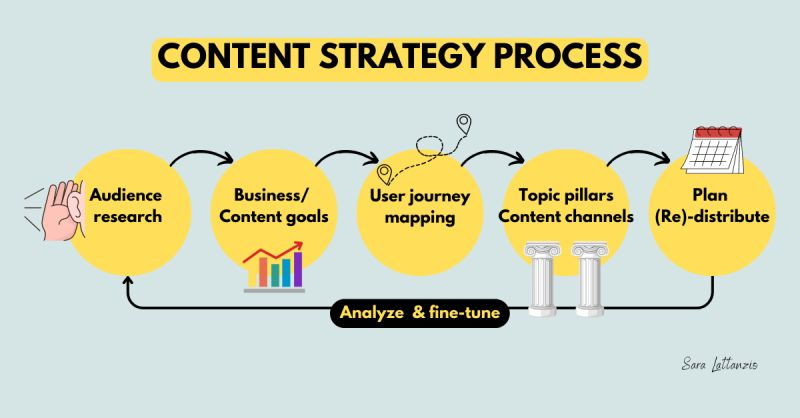
And here’s how I put it together, step-by-step:
Step 1: 𝗔𝘂𝗱𝗶𝗲𝗻𝗰𝗲 𝗿𝗲𝘀𝗲𝗮𝗿𝗰𝗵 👂
'Knowing your audience' is definitely not just a cliché.
If you're unaware of who you're crafting content for and what they want, diving into content creation = fast road to massive cash burn.
My approach always kickstarts with gathering insights from our internal teams interfacing with clients, and if possible, directly from the customers.
The end product?
A document encapsulating primary goals, jobs-to-be-done, and pain points of your dream clients.
This is then aligned with how your product or service swoops in as the solution.
(Feel free to add demographic and firmographic data, but be cautious—those alone won't make an actionable customer profile (hyper-common mistake).)
The value prop canvas is an ideal model to consolidate and visualize all of this information:

Step 2: 𝗔𝗹𝗶𝗴𝗻𝗶𝗻𝗴 𝗯𝘂𝘀𝗶𝗻𝗲𝘀𝘀 𝗮𝗻𝗱 𝗰𝗼𝗻𝘁𝗲𝗻𝘁 𝗴𝗼𝗮𝗹𝘀 📈
This is where most companies go wrong.
To them, content is merely an ornament to grab attention but there’s no real plan for how it should support business goals.
Here’s what I found myself saying at the beginning of many content strategy projects:
‘If your content doesn't help you achieve your business goals faster, then why are you creating it?’
Shaping your content strategy around business goals sets the course for every tactical move ahead – from picking topics to distribution tactics and the KPIs that gauge its impact.
Here are a few common examples:
- Biz goal: Raise brand awareness in X region - you’ll create content with the primary goal of building brand affinity and measure KPIs like traffic, share of voice, social impressions, and mentions in X region.
- Biz goal: Improve sign-ups by X% - assuming you already have a somewhat strong brand presence, you’ll focus more (NOT only!) on a BOFU content strategy that showcases your product and its perks. You’ll measure the number of conversions your content drove.
Step 3: 𝗨𝘀𝗲𝗿 𝗷𝗼𝘂𝗿𝗻𝗲𝘆 𝗺𝗮𝗽𝗽𝗶𝗻𝗴 📍
At this point, I break down the customer journey into levels of awareness, dissecting how their information needs and behaviors evolve along the way.
It's the sole approach that guarantees a well-rounded content strategy catering equally to new clients, fresh prospects, and people who barely know about your business.
For every stage of awareness, I pinpoint:
- Triggers - What led the customer to this stage?
- Actions - What's their modus operandi here?
- Emotions and questions - How do they feel, and what answers move them forward?
- Goals - What objectives do they pursue at this stage?
- Touchpoints - How do they prefer engaging with your business now?
Addressing these questions for each phase of the customer journey empowers you to 'deliver the right content - via the right channel - at the right time,' expediting the sales cycle.

Step 4: 𝗧𝗼𝗽𝗶𝗰 𝗽𝗶𝗹𝗹𝗮𝗿𝘀 𝗮𝗻𝗱 𝗰𝗼𝗻𝘁𝗲𝗻𝘁 𝗰𝗵𝗮𝗻𝗻𝗲𝗹𝘀 ⛩️
Now that we have identified our key (content) touchpoints it’s time to prioritize them according to our output capacity and resources.
Most companies shouldn't be everywhere and certainly can’t afford it. I always recommend going deep rather than broad when it comes to content channels.
Once we’ve identified our content channels it’s time to tailor our overarching content strategy to each of them.
Here’s what we could tackle at this point:
- Topic pillars and content formats per channel
- SEO strategy (here it is!)
- Specific channel-level tactics - think influencer marketing on LinkedIn
Step 5: 𝗣𝗹𝗮𝗻 𝗮𝗻𝗱 (𝗿𝗲)-𝗱𝗶𝘀𝘁𝗿𝗶𝗯𝘂𝘁𝗲 🗓️
Once we made up our minds about what we will distribute and where it's time to dive into a tactical execution plan: Who? What? Where? When? How often?
Moreover, establishing a process to ensure repeatable (content workflows) and reusable (repurposing workflows) content creation is essential.
Documenting these workflows is key to guaranteeing seamless alignment across your team, eradicating any disruptions in the content lifecycle.
This is the phase where automation steps up – for instance, routine tasks can be streamlined through your (content) project management tool, while content can be pre-scheduled (with platforms like HubSpot or Later).
Organization and structured processes can make or break your content strategy.
It's not all about creativity! 🙃

Step #6: 𝗔𝗻𝗮𝗹𝘆𝘇𝗲 𝗮𝗻𝗱 𝗳𝗶𝗻𝗲-𝘁𝘂𝗻𝗲 🔍
I wish I could tell you that your content strategy is a one-and-done deal, but that would be far from the truth (and it would probably leave me with a lot less to do too, to be honest!).
Regularly auditing your content is the way to fine-tune your approach and ultimately hit those KPIs.
And just to up the complexity, there are actually two levels of auditing to tackle:
- Tactical level (e.g. LinkedIn post formats, publishing schedule, keyword strategy). Give it a solid 3 months before applying significant changes
- Strategic level (where you revisit all the steps in this lovely article), ensuring your content strategy still mirrors your business strategy and customer profiles and stays in sync with your buyers’ journey. This one calls for a more patient wait of at least 10 months+ before big changes are introduced.
So, now you're in the know about how to craft a money-making content strategy from scratch. And you also know why 'just creating content' is a bit like throwing spaghetti at the wall, hoping something will stick eventually.
If you enjoyed this, follow me on LinkedIn or schedule a chat with me so we can create your content strategy together 🙌.
—Sara