Since its launch in 2020, copy.ai has grown to 8M users in the fierce battle for AI content writing tools.
But back in 2022, when they began investing in SEO, search volumes for their core keywords (e.g. "AI content generator") were negligible if they existed at all.
Over that year, as we are all well aware, there was a rapid wave in demand for AI copywriting tools.
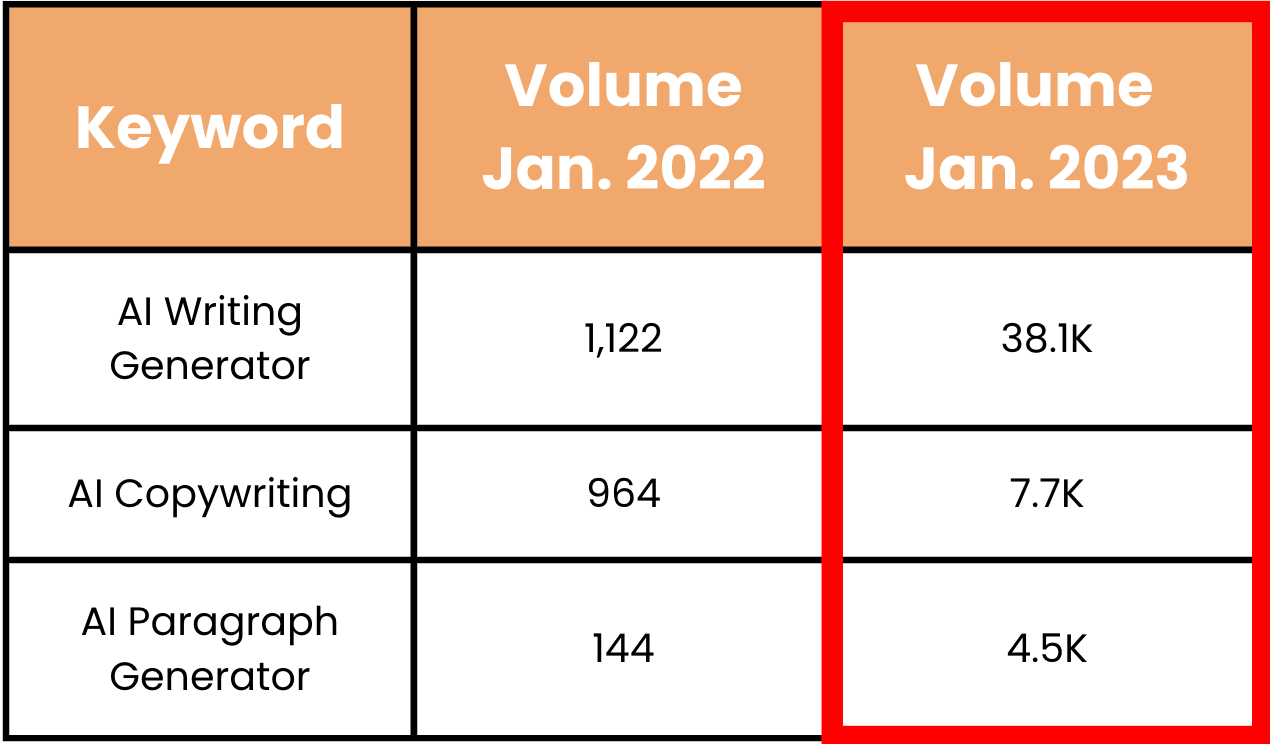
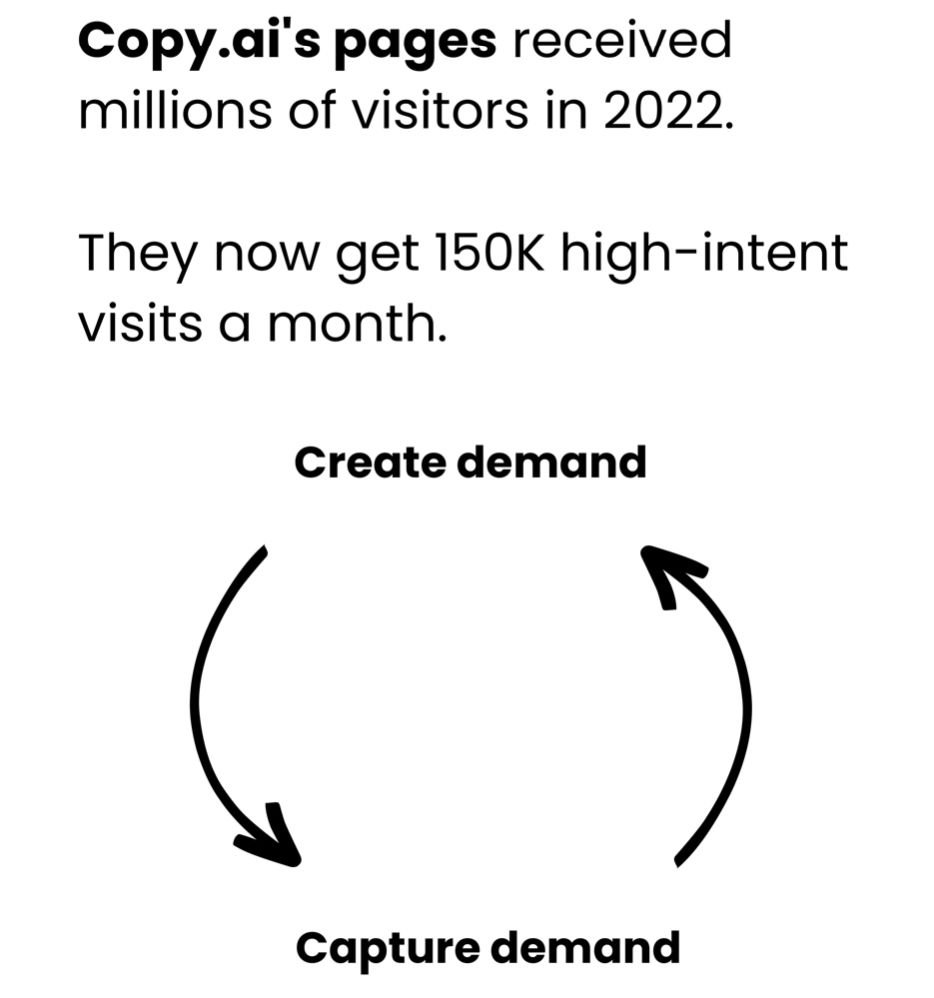
The team at copy.ai correctly predicted that demand. And as a result, they were the first to build an SEO strategy to capture it. And they won.
Their big money maker? A cluster of tools pages that now brings in way over 150,000 high-intent visitors a month.
In this SEO case study, we look at how copy.ai's SEO strategy helped them seize a first-mover advantage in the emerging category and how they built an SEO moat that they still benefit from today.
Things You'll Learn
- How copy.ai gained a first-mover advantage, capitalizing on the AI wave
- How to determine if you have content-intent fit (or your content is never gonna win)
- 5 changes to your <titles> that improved copy.ai’s CTR by 2.1% points.
- Where they focused backlink building at copy.ai and 3 key tips for building backlink authority
Results
Copy.ai grew 6x traffic in 5 months from Feb 2022 and July 2022.
In total over those 5 months, the site received 1M clicks (whereas in the 5 months previous, they received 166K).
They now rank in #1 spots for high intent keywords like:
- AI writing generator (13K Global Vol.)
- Free AI writing generator (5.2K Global Vol.)
- AI copy generator (1.4K Global Vol.)
- Paragraph generator (11K Global Vol.)
Across their AI tools cluster alone, copy.ai ranks for +1,400 keywords in positions 1-10 and receives over 130K monthly visitors.
Building High-Intent Pages (Where Keyword Tools Couldn’t Yet Predict)
Copy.ai was founded in 2020 by Paul Yacoubian, who, in early 2022, kicked off their SEO strategy with a series of tool-based landing pages that targeted bottom-of-funnel keywords around text generators.
Examples include:
- A paragraph generator
- An instagram caption generator
- A sentence rewriter
Each of the pages contained a free, basic version of Copy.ai’s tool, putting their product front and center to help serve the intent behind these keywords.
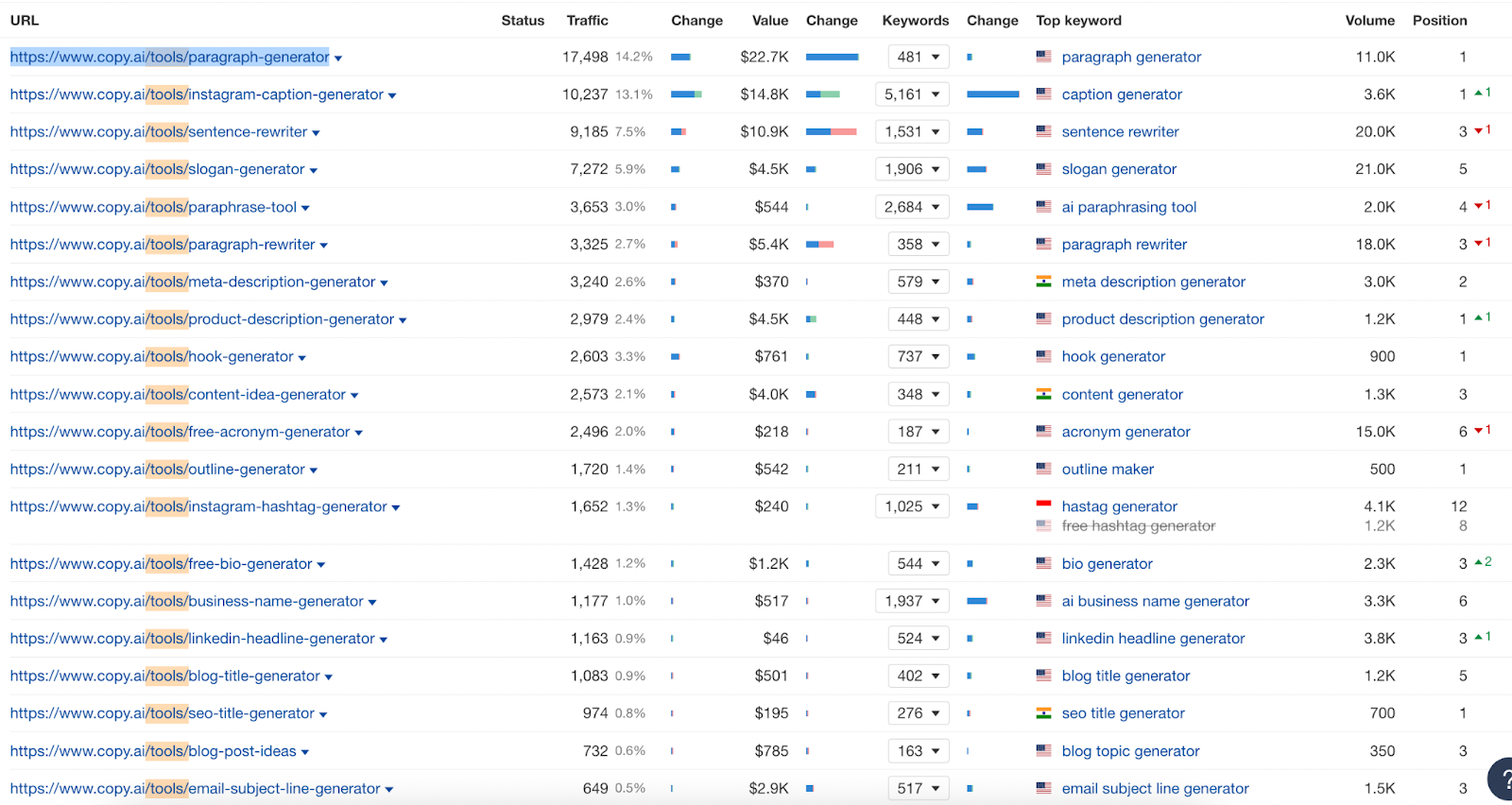
These pages demonstrate a fantastic case of emerging search demand. Copy.ai is, of course, an AI content generator, which back in 2020 was a use case that had zero search volume and was hardly part of our lexicon.
These pages targeted a pain point (“Instagram caption generator”, “slogan generator”) but not a tool.
But, as AI technology gained traction, these tools, which are built with AI, now rank in #1 spots across the newly emerged search category (“AI Instagram caption generator”, “AI slogan generator”).
This was by design. It would’ve been foolish to work hard to build demand for a category and not capture new search volume.
Just look at this Ahrefs graph for the keyword “ai writing generator”.
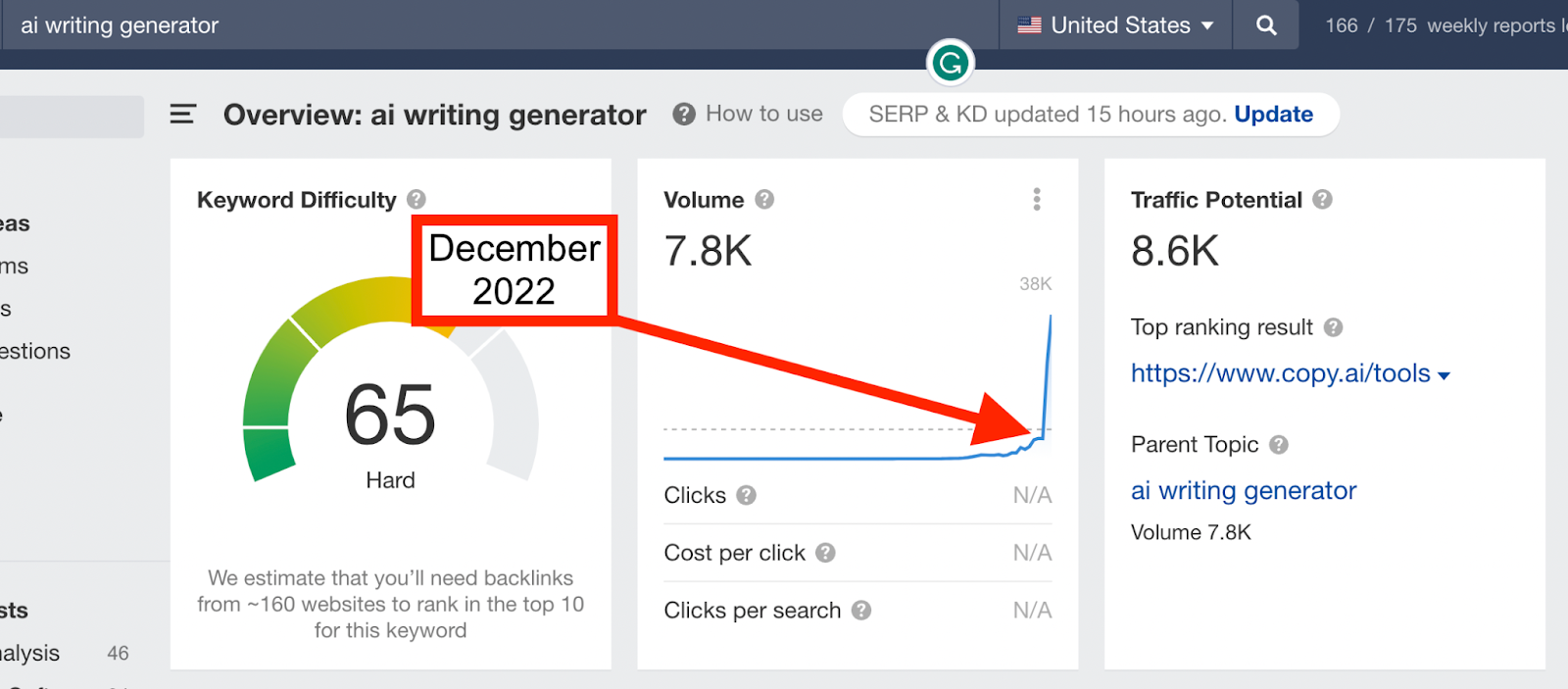
It wasn’t until December 2022 that Ahrefs picked up on the search demand for this keyword.
“AI” writing is such a new category that the demand for the category was hidden from search volume tracking tools. We see the same Dec’ 2022 scenario across every AI-related keyword:
- AI paraphrasing tool
- AI product description generator
- AI letter writer
- And so on
Copy.ai crafted its “hub page” around this topic anyway and they earned well-deserved first-mover advantages for doing so.
Here’s their hub page from the Wayback Machine in March 2022. Note the optimization for “AI-powered copywriting generators”.
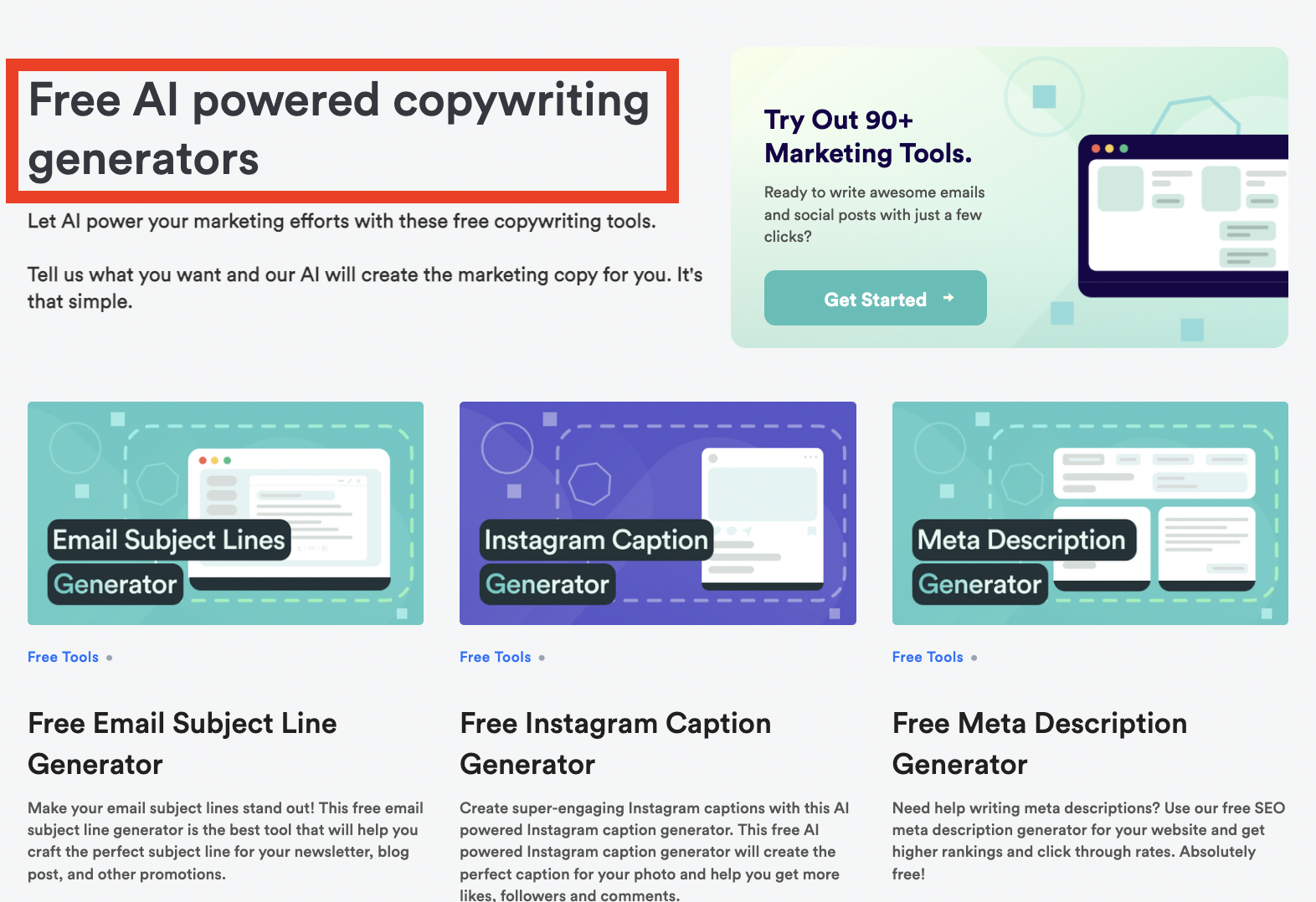
This page has since received a design update to look like this:
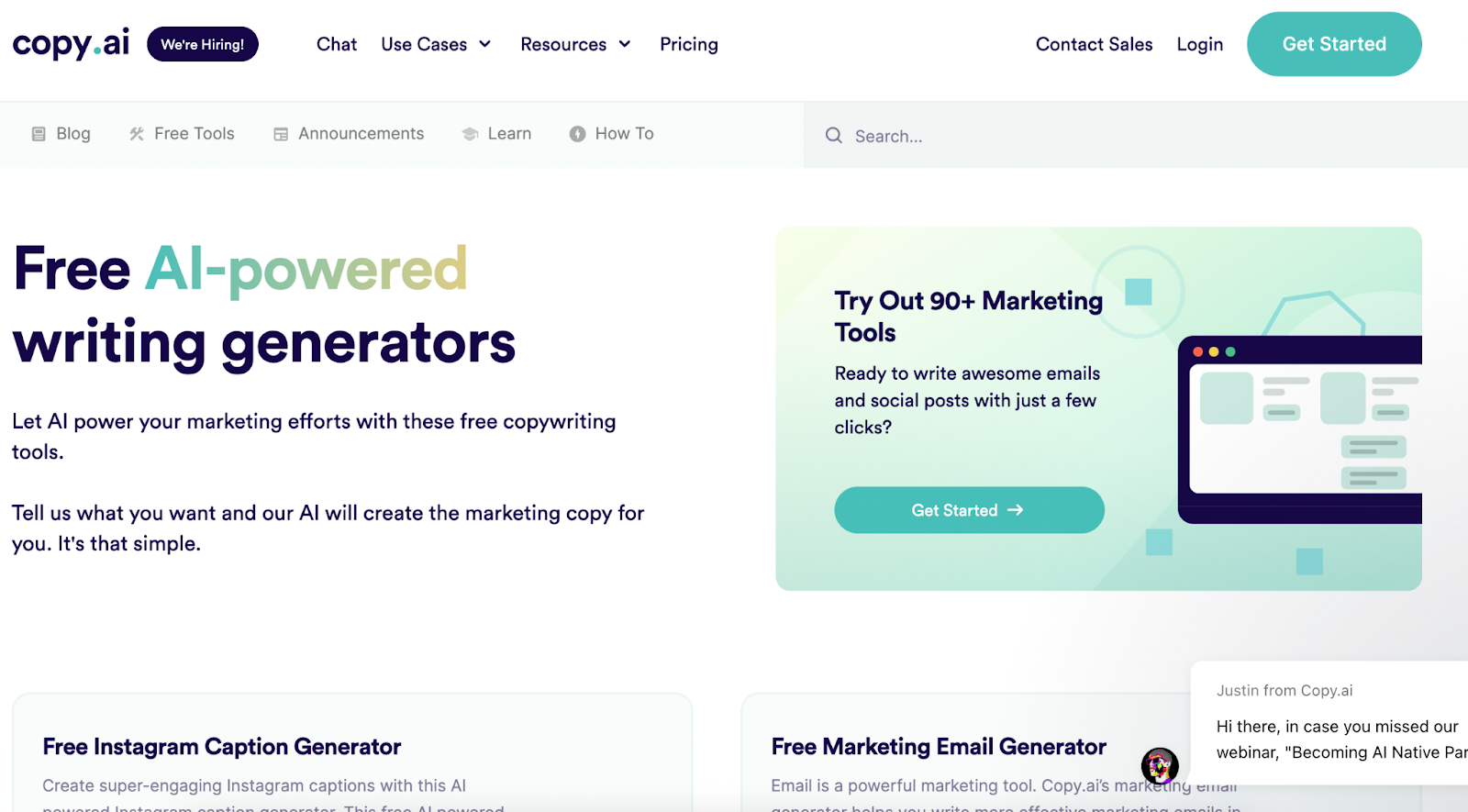
Which, despite a lack of URL keyword optimization and hardly any written content on the page, receives well over 50,000 monthly visitors on difficult-to-win keywords like “ai writing generator”.
As we’ll read, Jeremy and his team at uSERP helped Copy.ai seize their early advantage by continuously optimizing content and building backlinks aggressively.
Benefits of First Mover Advantages
When you’re first to create content on a topic, you win several first-mover advantages:
- URL age
- Backlinks
- Data - Know the real search volume
In this sense, predicting search volume and search demand gives you a distinct advantage over competitors.
How Copy.AI Made Sure They Won [3 Methods]
Jeremy and his team worked with Copy.ai to help them capitalize on their first-mover advantage.
The product and many of the tools pages were ready and live. But back in 2022, they weren’t yet ranking for much at all.
We heard in the podcast interview that the uSERP team helped:
- Improve on-page optimization (via content-intent fit and internal linking best practice)
- Improve click-through rates via headline optimization
- Built authority with backlink acquisition
Let’s break these down and look at the core fundamentals behind them.
1. On-Page Optimizations (Mid-2022 to mid-2023)
One of the first things the uSERP team did was:
- Listed the tools pages
- Prioritized them by their product-content alignment
- Analyzed each page for “content-intent fit”
- Updated page content in line with intent
At this point, you might be wondering what ‘content-intent fit” is and how you know if you have it.
It’s a term used to describe how well the type, length and structure of the content on your page matches what search users are looking for.
For example, when someone Googles “top marketing softwares” they expect to see:
- A list of marketing software (not just one software, a list)
The most useful content for this search type will:
- Contain a review and comparison of each (not just a list of names)
- Have been written by someone who has actually used all the tools listed, and can alleviate the pain of doing vendor research
- Include an objective measure—perhaps a ranking or rating system devised to make the tools comparable
How do we know this?
A combination of common sense—empathy for the search never goes a miss—and an analysis of what’s working right now, determined by Googling the keyword and looking at what ranks in position 1-3. Is it a list? A short definition? A video?
With mini-tools like the ones copy.ai has built, the 'content-intent fit' is a little messier. As an example, take this micro-tool that I use regularly to capitalize my titles.
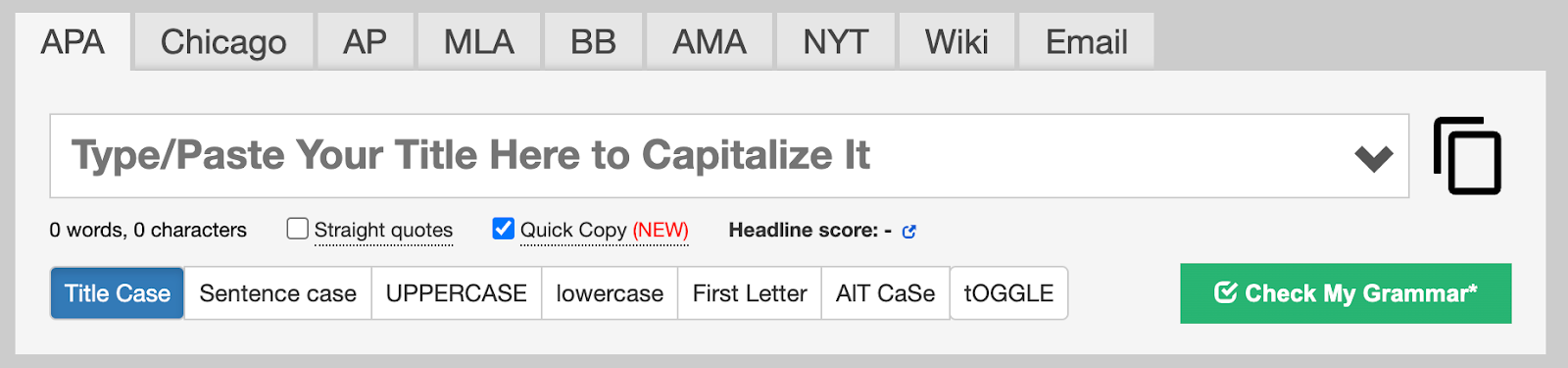
My search: Title Capitalization
Search results: Show mixed content types. The #1 rank is the mini-tool, the #2 rank is a blog post.
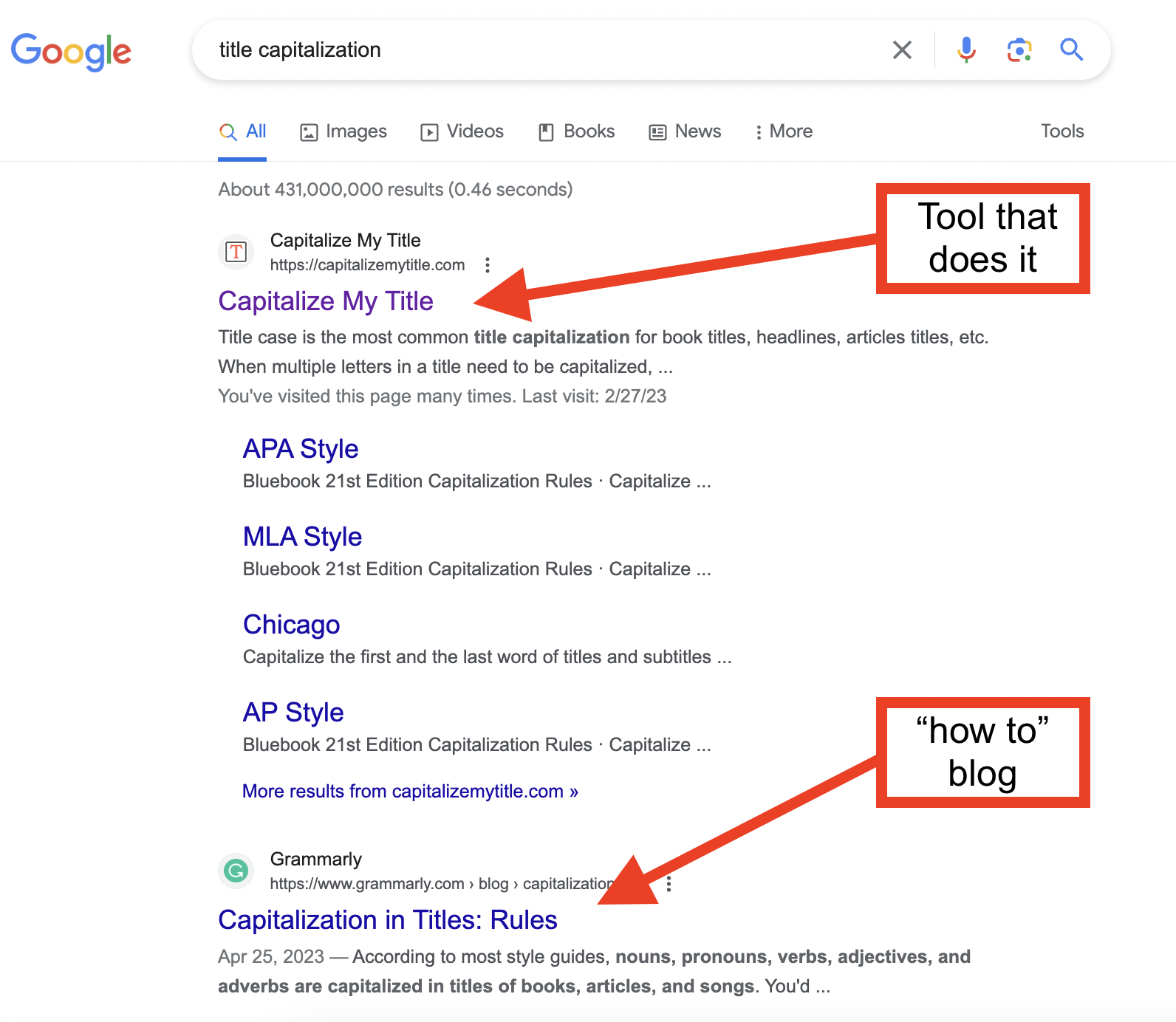
This is when you fall back on primary user research and aim to create the most useful experience for the user.
As Google improves its understanding of visitor experience, I believe pages will win if they keep the user on-page longer and the visitor is not required to head back to Google to satisfy their request.
Circling back to copy.ai, in 2020 their page design for individual tools looked like this:
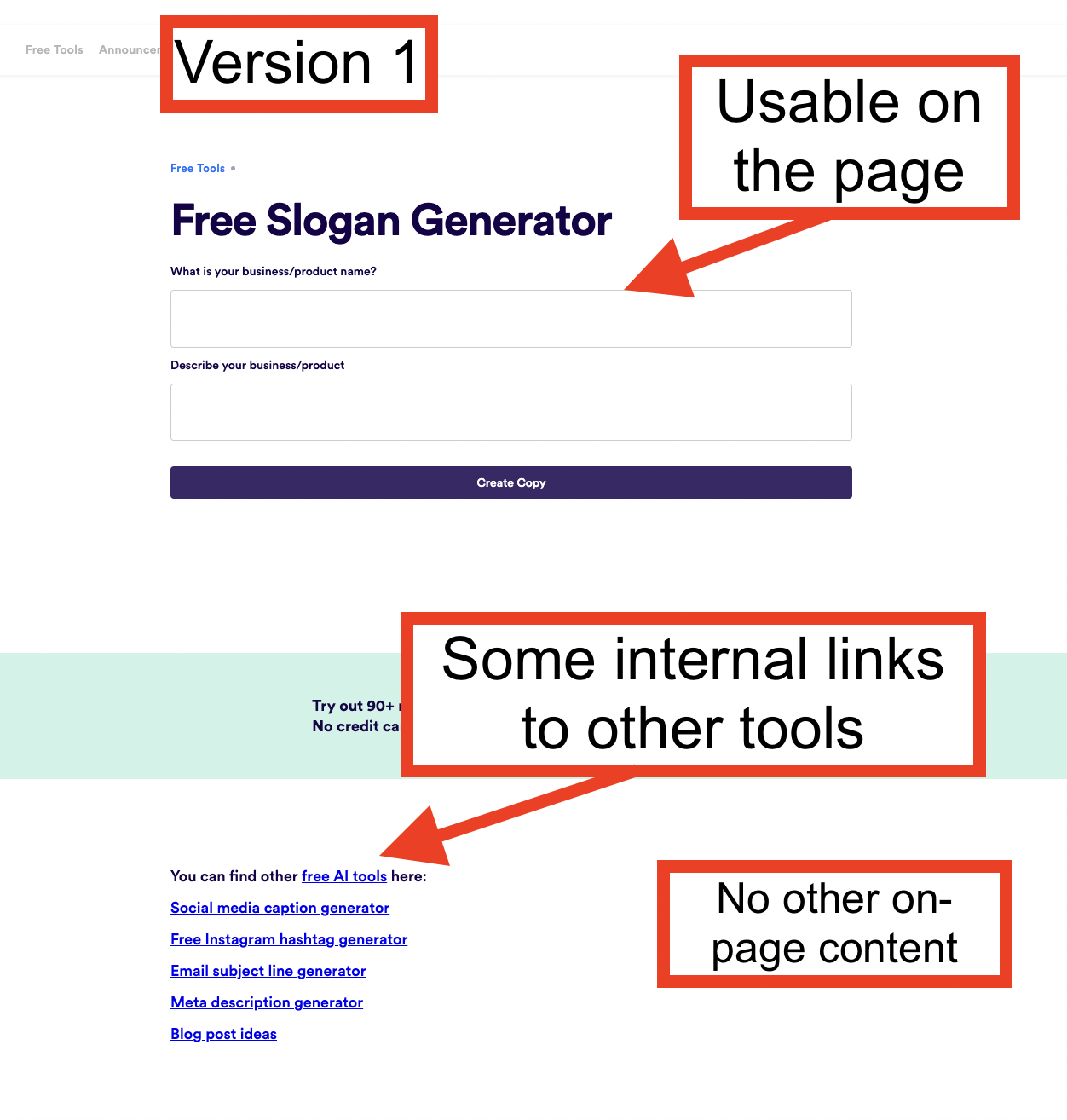
This tool generated the copy you were looking for—giving the user what they wanted up front.
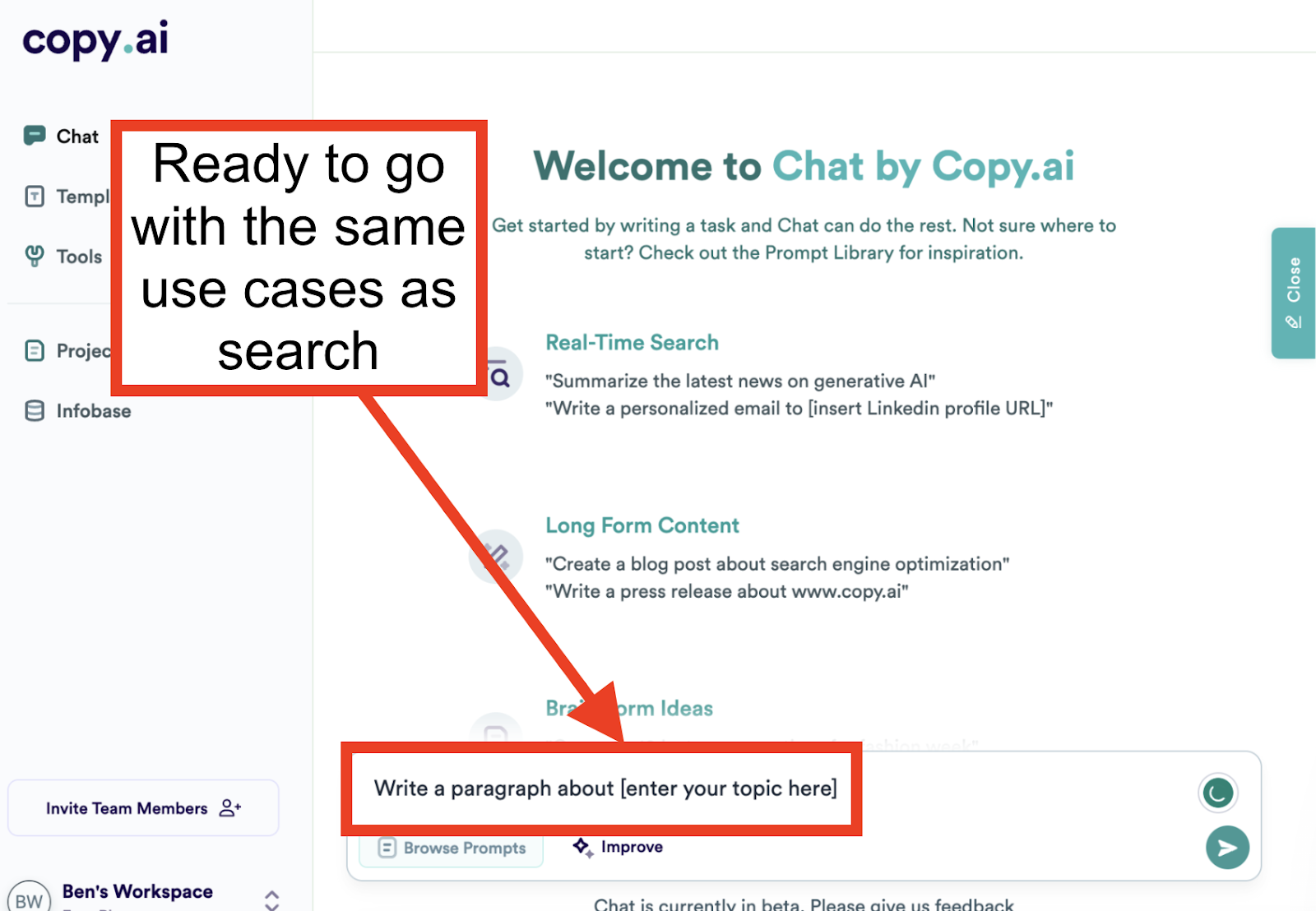
Today, in 2023, this page funnels the visitor directly into the product via a sign-up flow.
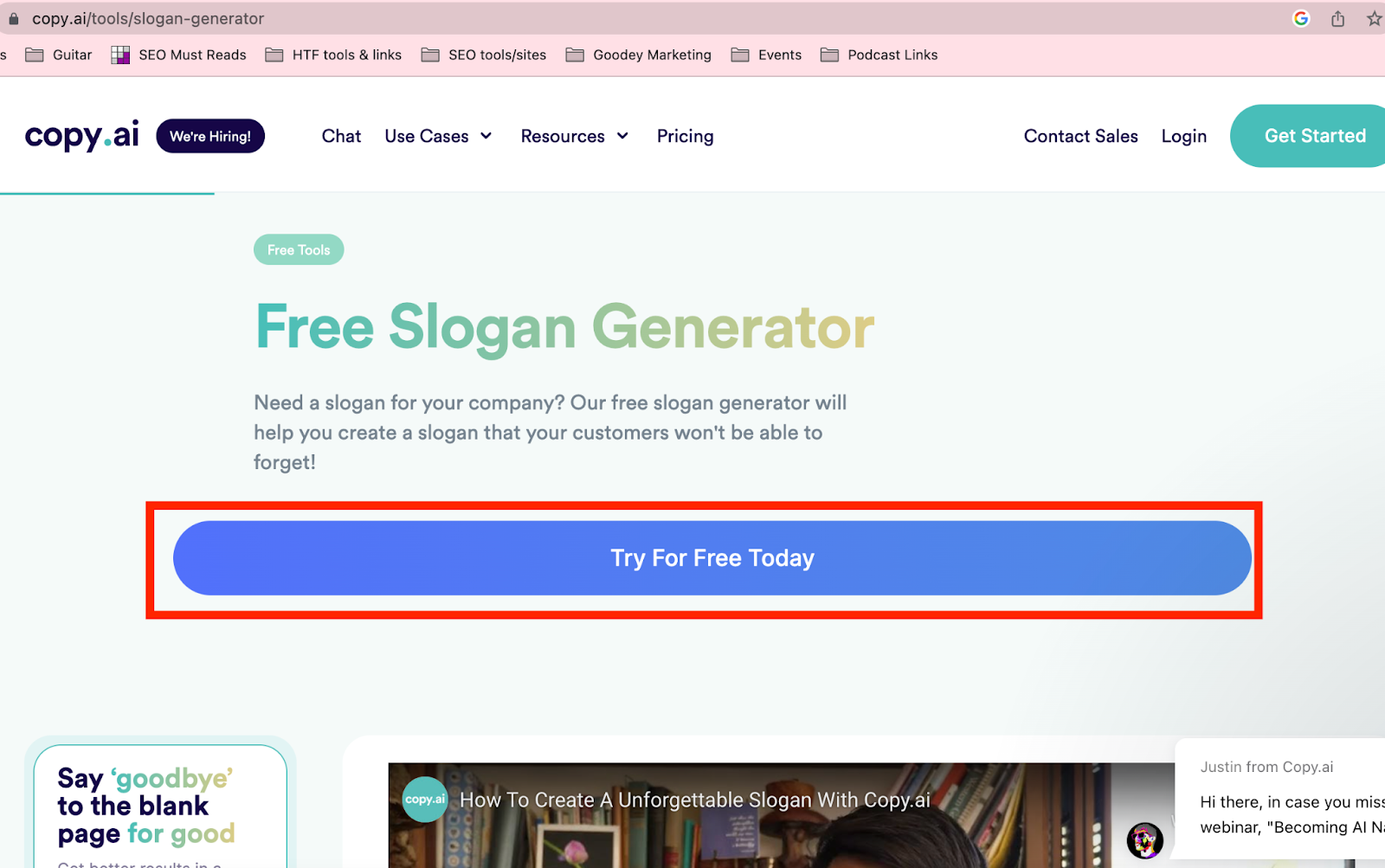
The extra step must create friction for the visitor, but high conversion rates for Copy.ai.
Besides, when you do land in the product the experience is more complete and high value, you land in the product itself, ready to go with the exact use case you searched for:
Improving On-Page Content
When these pages were launched, the word count was low and aside from some collapsable FAQs there was close to zero additional content on the page.
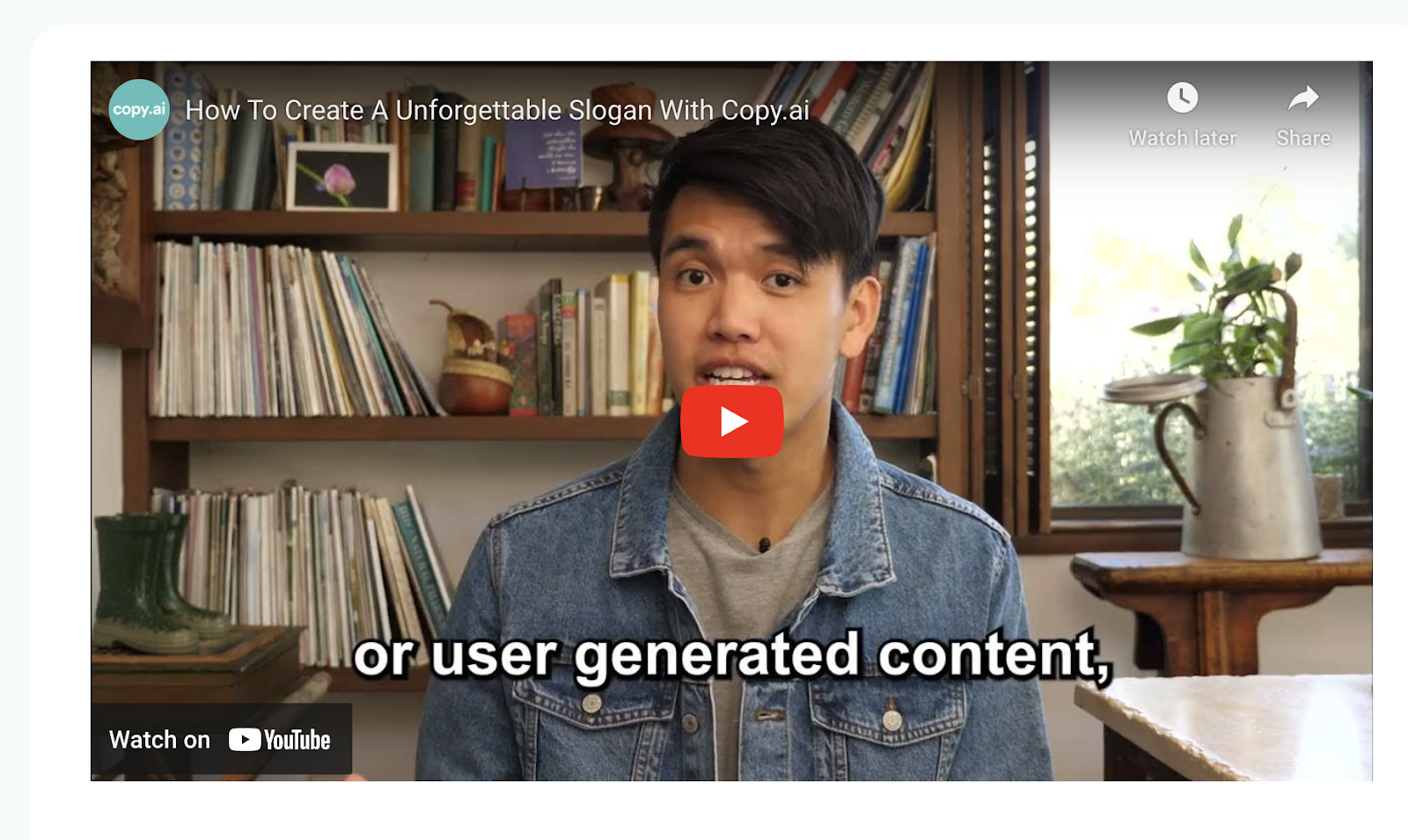
Over the next year, under uSERPs guidance, they added video guides to high-priority pages (now also providing organic wins on YouTube).
They also expanded the word count, adding a detailed 1,400-word guide on many pages that touch on the right keywords.
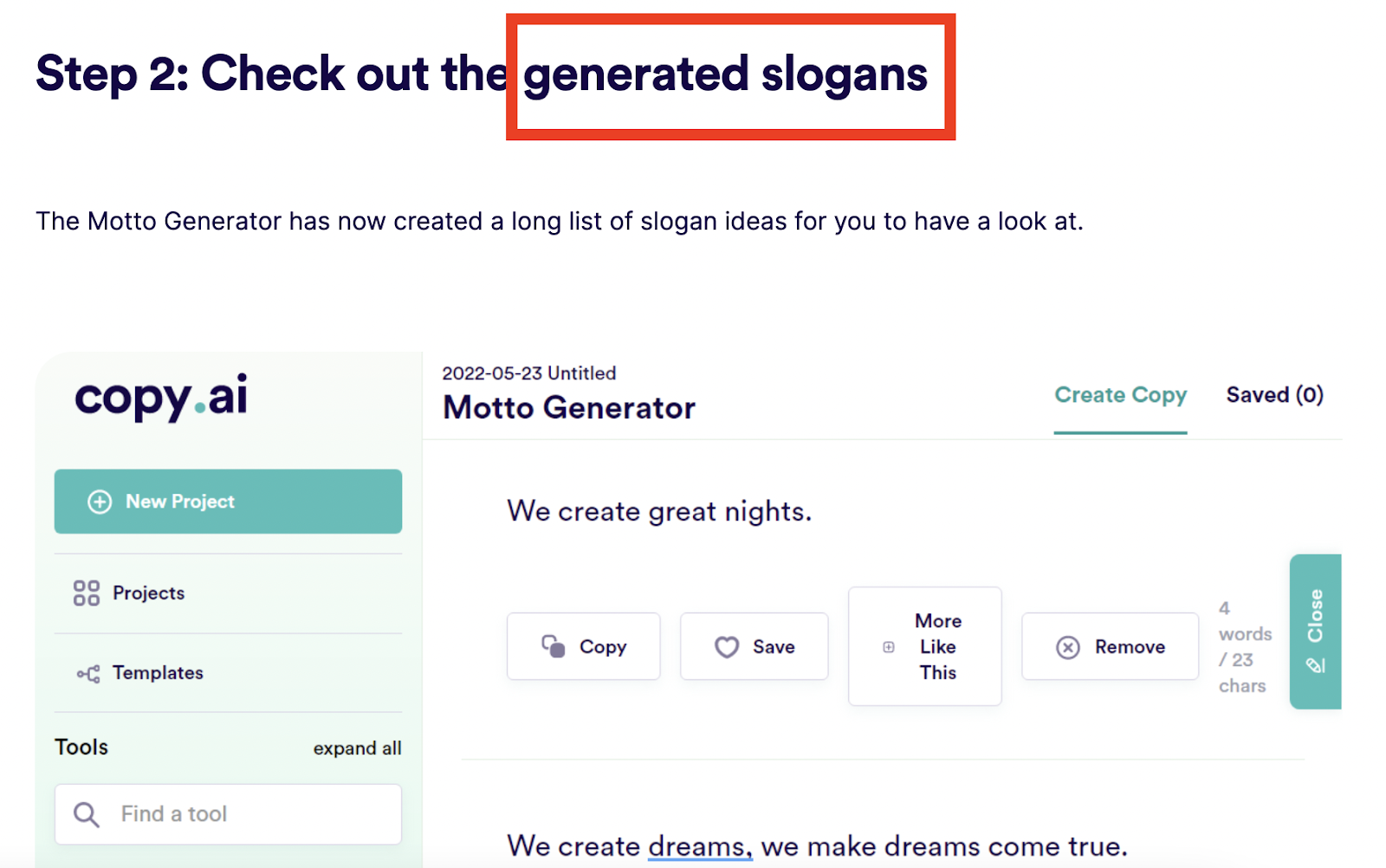
While word count is explicitly not a ranking factor, more headings and words on the page help Google better understand if the page meets search intent.
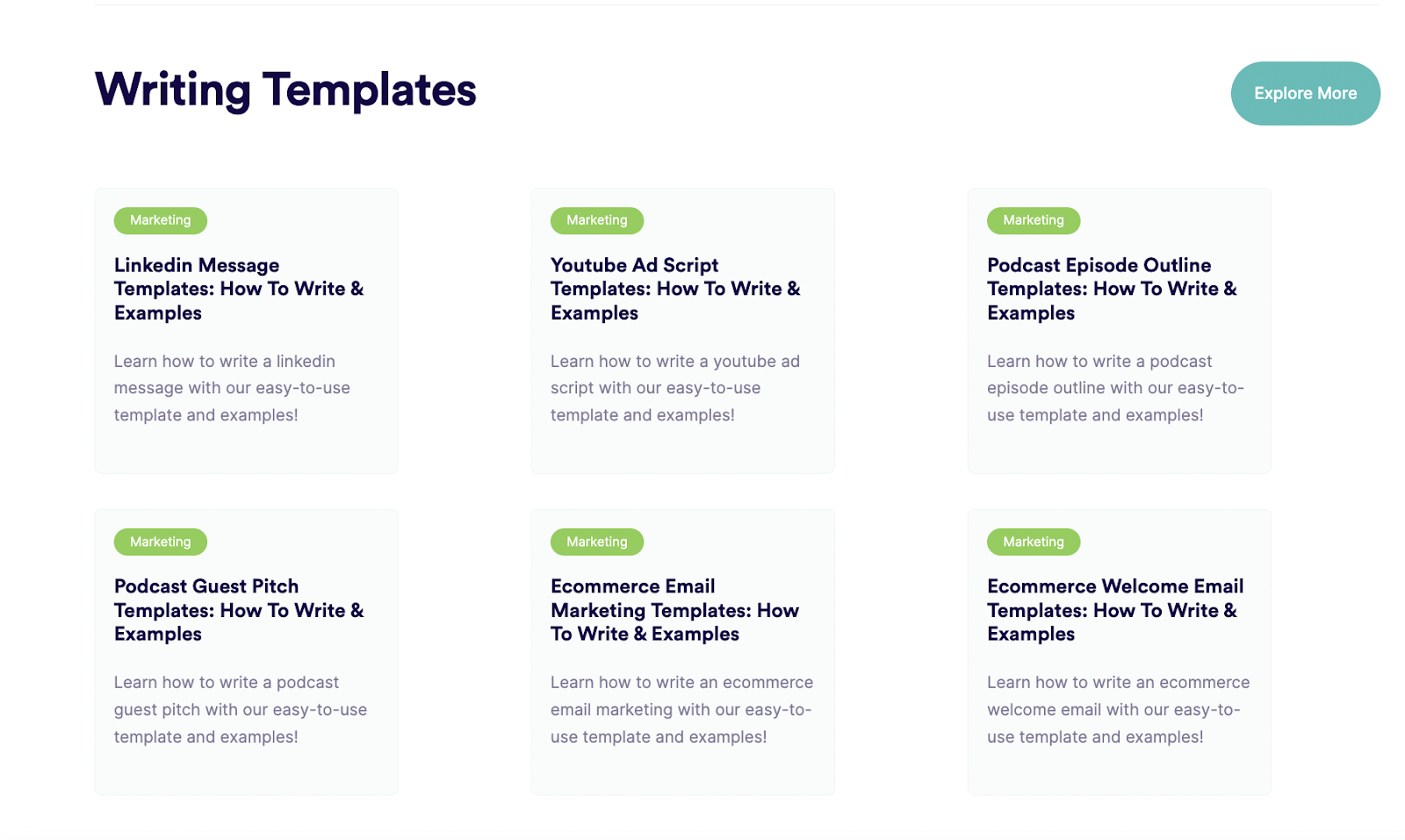
Another addition to Copy.ai’s tools pages was a new and improved internal linking structure. For example, the page template now includes links to other useful content across the site:
The Wayback Machine reveals two other improvements:
- In July 2022, the page design improved.
- In October 2022, the page looked different again—the tool is now only available via sign-up.
Jeremy noted in the interview that they continuously took what was working best and applied it across all their tools, iterating all the time.
2. Five Ways to Differentiate Titles to Improve Click-Through Rates
Jeremy and his team improved Copy.ai’s click-through rate (CTR) by 2.1%.
A major way they did this was to optimize titles that appear in the SERPs. Their goal was to show the content was more click-worthy compared to others.
Here are 5 tips from Jeremy on creating differentiated titles that boost CTRs:
1) Create a Curiosity Gap
The curiosity gap is the space between what we know and what we don't know.
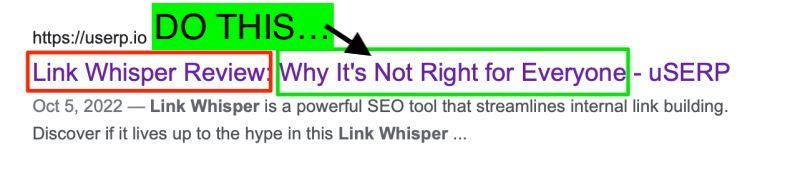
This copywriting technique creates a burning desire to click and uncover key information.
In the example shown above, the addition "Why It's Not Right For Everyone", creates intense curiosity. It makes people second guess what they already know and want to know what they’re missing.
2) Add Credibility to Your Headline
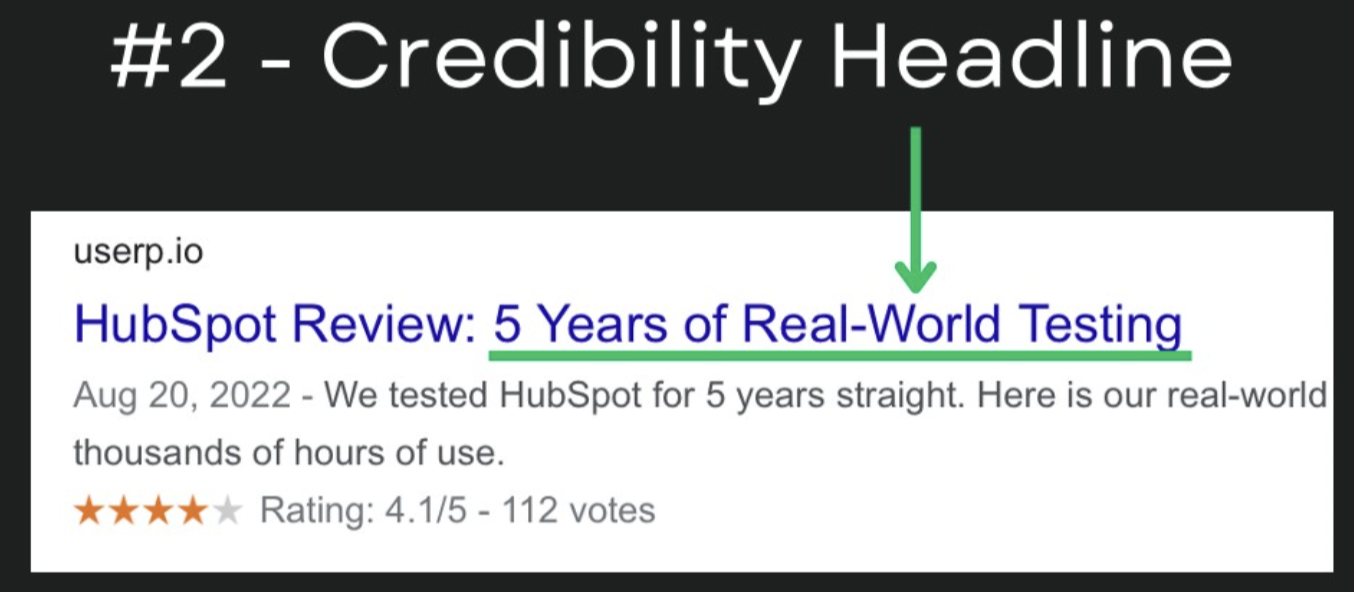
Tell searchers why they should click and trust your content.
GOOD: HubSpot Review: 5 Years of Real-World Testing
BAD: HubSpot Review: CRM Tool Features
People want real-world, truthful, helpful information.
Not conjecture and theory. Use your credibility to your advantage to increase CTR.
3) Callout Your Audience
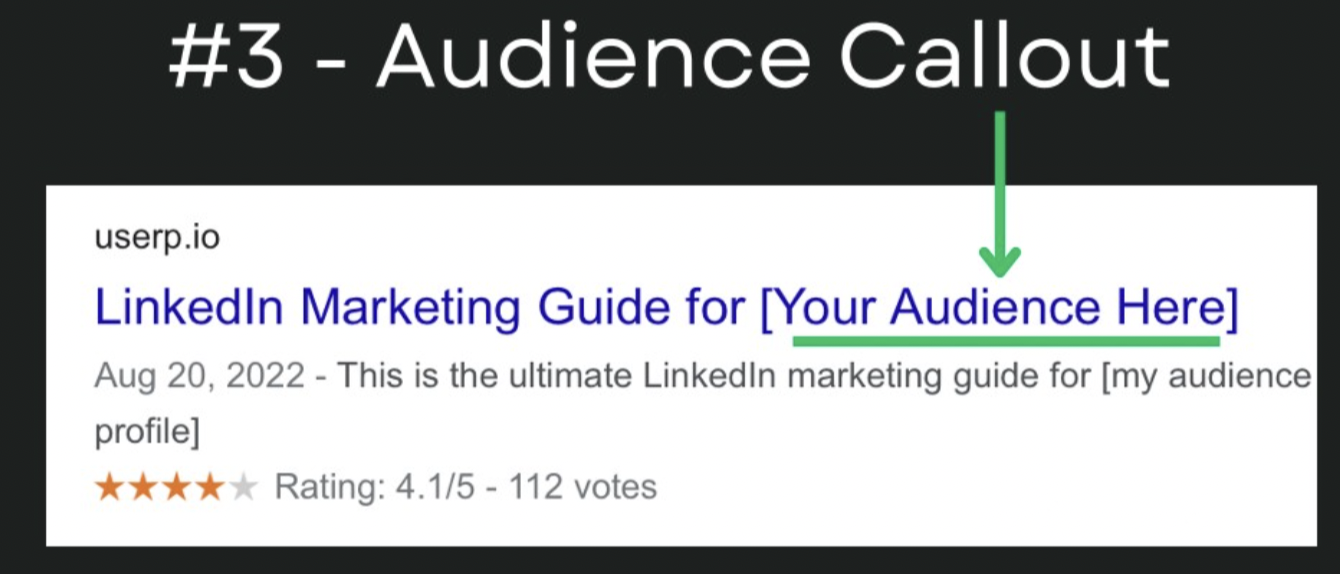
Be direct with your audience and call them out.
GOOD: Linkedin Marketing Guide for [New Users]
BAD: The Best Linkedin Marketing Guide
Speak to them and you'll increase your CTR from your ideal customers.
They'll immediately know the content is tailor-made for their needs.
4) Handle Objections
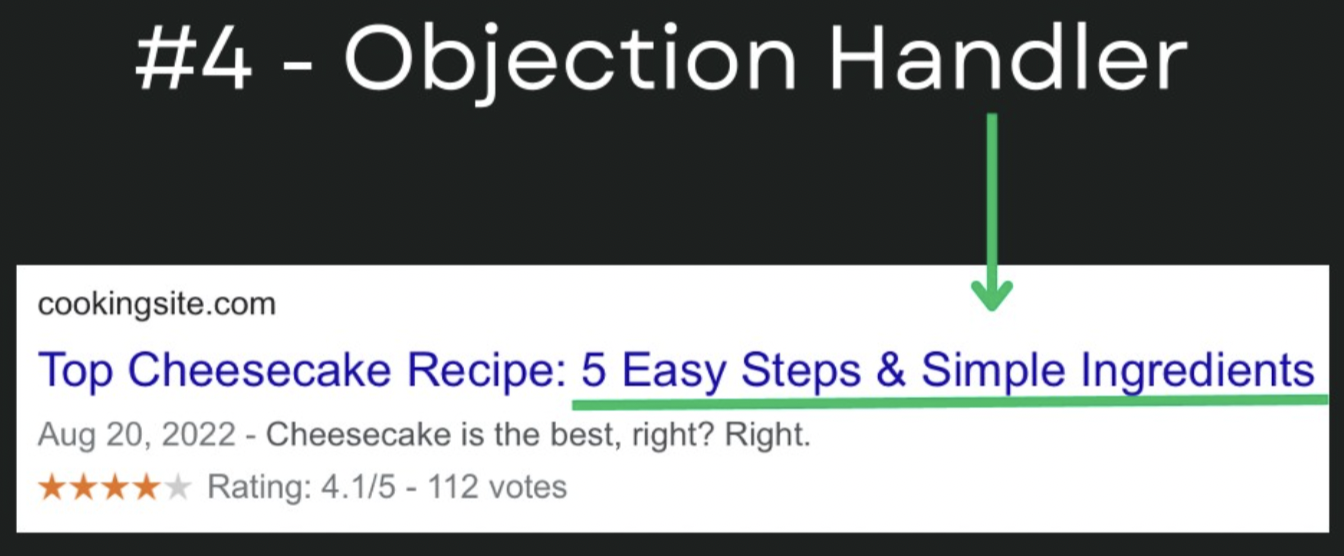
Tackle objections with your titles to reduce friction and drive more clicks.
What problem might they face when searching for a solution?
“Making cheesecake is hard!” → 5 easy steps
Address them in your headline and you’ll improve CTR.
5) Speak to Your Audience
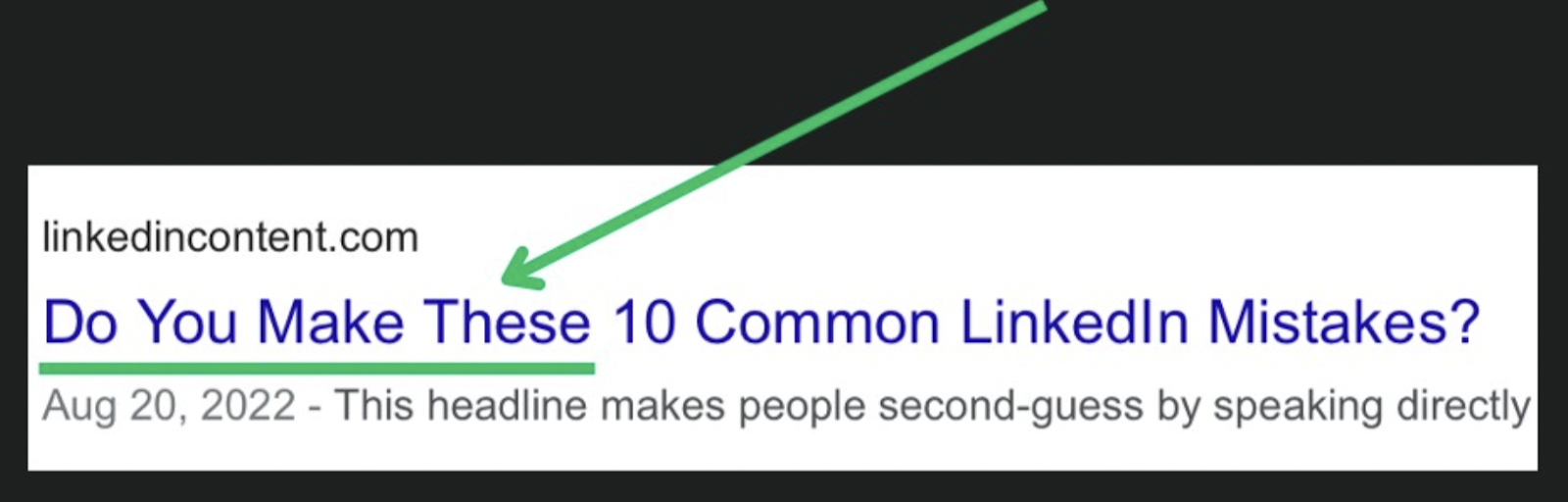
Talk directly to your audience.
Involve them in the conversation and grab their attention.
This blended framework speaks to the audience and involves the curiosity gap:
“Do you know these mistakes?” → I don’t know! I should find out.
These tips were originally a LinkedIn post by Jeremy here. They’re the exact framework made to improve CTRs for copy.ai.
3. Building Authority with Aggressive Backlink Acquisition
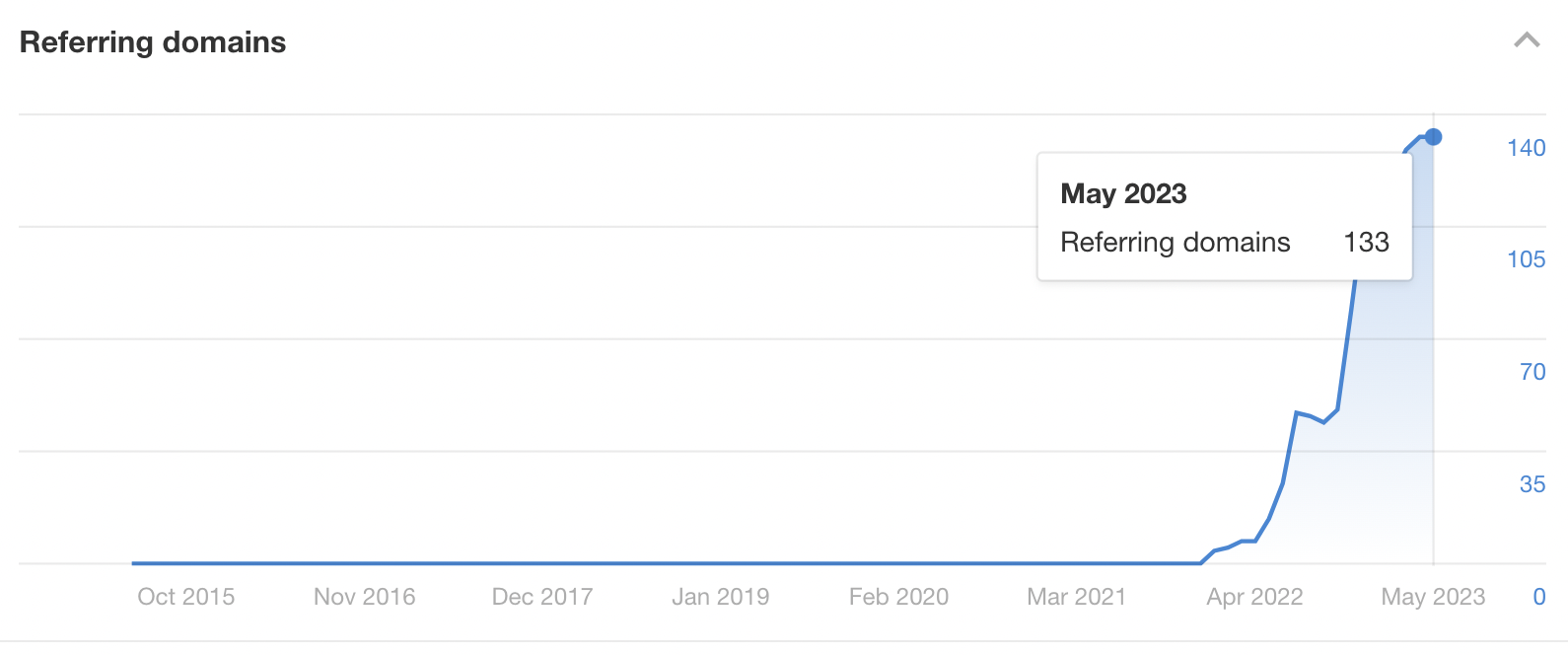
Here’s a snapshot of the increase in backlinks to Copy.ai’s /tools pillar page:
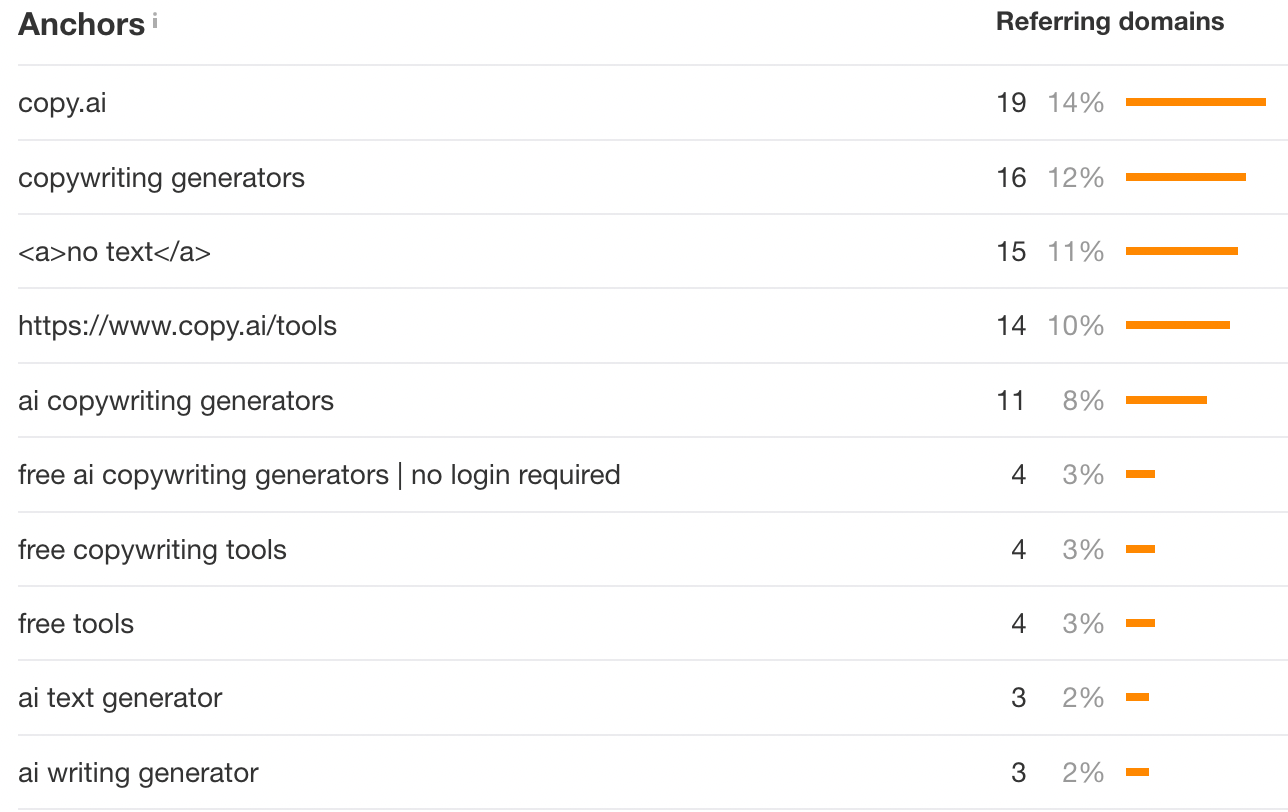
And the anchor text profile of that page:
Jeremy noted that as Copy.ai was a first-mover in this space, they want to build authority for them quickly and help them get and maintain position 1.
Why? Because typically, those who hold position 1 in the search results accrued the most backlinks organically. Over time, the slow build of backlinks solidifies your position.
To get into those top three positions on a competitive term, you also need backlinks. It’s a chicken-and-egg situation that the uSERP team solved by going out and getting backlinks themselves through:
- Guest posting
- PR link placements
- Relationship-building
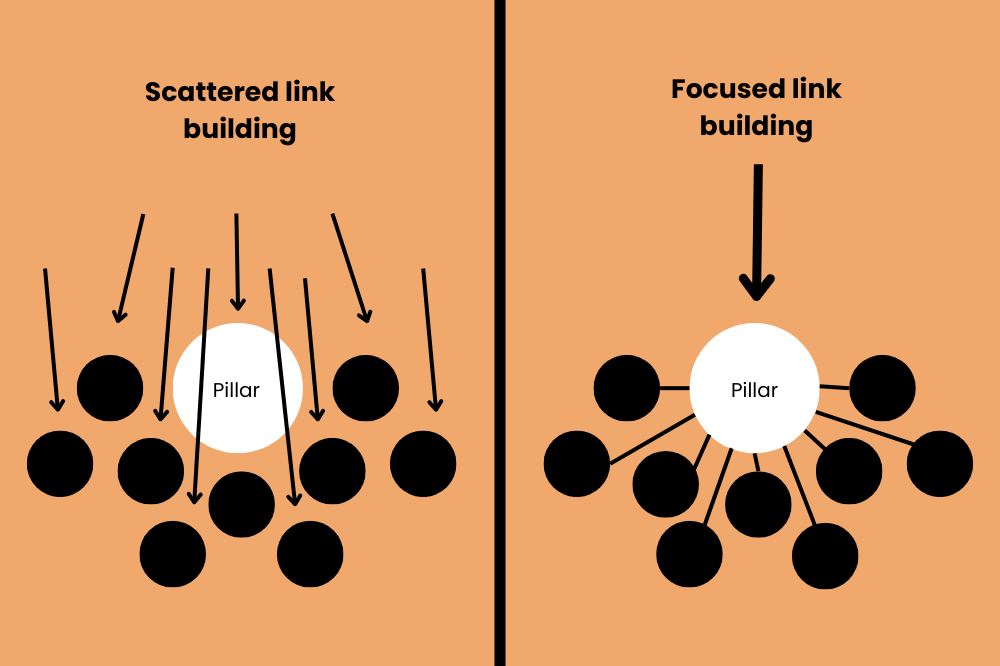
The uSERP team focused their link-building efforts on the pillar page (copy.ai/tools).
Jeremy notes that they didn’t want to spread link-building efforts too thin, so they built momentum on one page and added internal links to pass “link juice” authority to the wider cluster.
I asked Jeremy how his team approaches white hat link building, he gave me these four key tips:
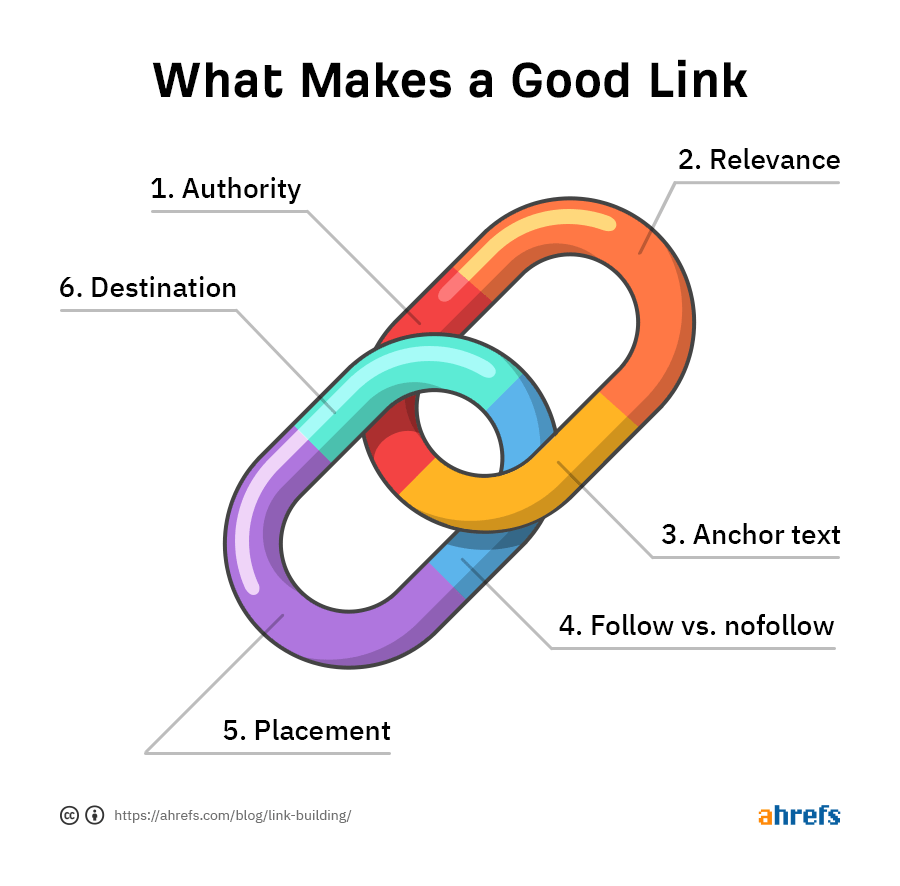
1/ Know what makes a good backlink
Some links are worth more than others.
You should spend an outsized amount of time obtaining links from sites with both:
- High domain authority (Hubspot, Wordpress, etc.)
- High niche relevancy (are authorities in your area)
One good link can outweigh 100s of bad ones.
Copy.ai’s tools page now has 47 backlinks from >30 DR websites and 10 from >60 DR websites. The best ones come from topically relevant blog posts like “top content writing tools” and “top AI writing tools”.
2/ Prioritize digital PR
PR link-building is a future-proof method. Every link is whitehat, they’re earned naturally because you created something link-worthy that top sites want to backlink to.
Typically, PR-worthy content focuses on new data or research that you send to journalists as a source. One example is this “State of Backlinks” report that uSERP created in 2022 which earned 268 backlinks for their own site.
3/ Build relationships at scale
There’s no substitute for building relationships with other writers, content managers, and marketers at websites in your niche. Writing relevant content for other sites is where the uSERP team focused.
If they trust you and the quality of your content, they’ll likely:
- Accept guest blogs anytime you offer
- Ask you for expert input (a quote in exchange for a backlink)
- Place links wherever you ask (especially if you offer one in exchange)
4/ Build page-level authority
Sometimes your domain authority won’t be enough to help you rank. You should prioritize backlinks to pages that are starting to perform well and get them to the top.
To dig deeper into this topic, check out uSERPs guide on link-building strategies here.
The video below captures Jeremy’s thoughts on scalable backlink-building techniques from the podcast:
Final Thoughts on Copy.ai’s Tool-Driven SEO Strategy
In the last two years, Copy.ai has built a powerful advantage in search.
They moved quickly into a growing space, putting their product front and center to build genuinely useful content that now pulls in hundreds of thousands of high-intent visitors every month.
Their SEO moat was built on:
- A quality product experience that fulfilled search intent
- Well-optimized pages that helped high rankings
- High authority backlinks that fueled the fire
How future-proof is copy.ai’s strategy? It remains to be seen what will happen to these pages as generative AI appears in Google.