
A rapid influx of authoritative backlinks could be the boost you need to 10x your search volume. PR is one technique every marketer can use to land 100s of backlinks over night.
Ever wondered how some companies get their name (and link) on famous news websites from around the world?
I'll let you into a little secret...it doesn't take a huge PR budget and insider industry connections.
All it takes is a little creativity and a little persuasive panache.
But, why bother?
Let me show you what can happen to your organic traffic when you build a bunch of organic backlinks:
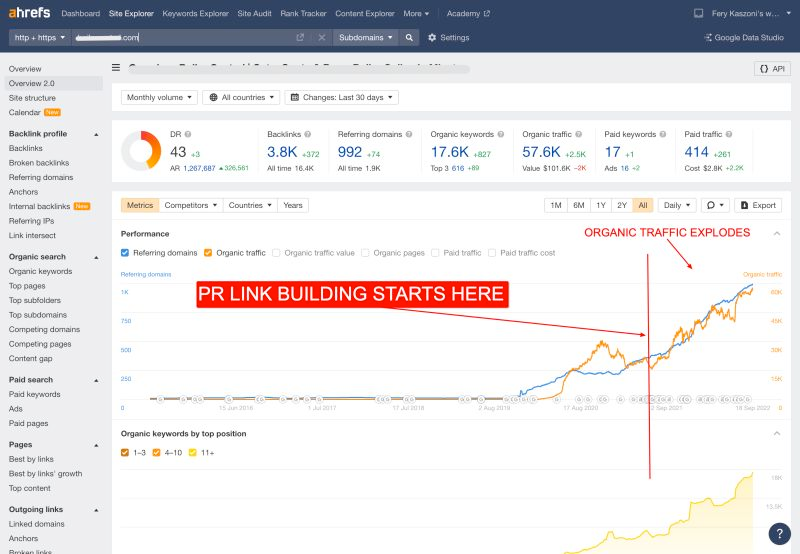
It gives a huge signal of authority to your site, lifting your rankings across the board.
In this playbook, I'll walk you through three PR link-building strategies and illustrate them with real-world examples.
I'll also answer some key questions you might have, and share the real email template used to get 100s of organic backlinks in one weekend.
Why are links important to a marketing strategy?
Links are one of the main pillars of SEO, alongside quality content and technical implementation.
Invest in these three pillars well and you’ll win in building your search traffic. The concept is simple but the execution? Not so much.
Links are treated as a vote from other websites to your website. They say this website is an expert, it’s important, or they’ve made a great point that I want to tell my own readers about.
When Google analyses the internet, they look for who is an authority on each subject and where those sites are linking to themselves. That’s a fundamental part of who Google chooses to rank—articles being endorsed by topical, high-authority sites are likely winners.
Would you prefer one link from the BBC or a respected industry publication on the topic your article is about?
The question I posed here in the interview was to understand whether you’d prefer a website like the BBC (an extremely well-respected news outlet, that isn’t an expert in your niche topic) or a website like a trade journal (less respected by the average person, but has deep topical expertise).
The answer is, it depends.
If the BBC is addressing an irrelevant topic, say gardening, and links to your fashion site… that’s not a great link. In that case, it’d be better to get a link from Gardening Weekly.
But, if the journalist is an authority in fashion and writes an article for the BBC… you should take the BBC link every day.
The key point here? Experts (authors or websites) that have authority can pass that to you through a link. But they have to be an authority.
How can a PR approach accelerate link-building efforts?
PR is not like every other link-building strategy (e.g. guest posting and blogger outreach).
PR links are different because you don’t pay for a link in any way. They are 100% white hat. They’re earned links.
Blogger outreach is black hat—if you give anything in exchange for a link, Google considers it officially ‘black hat’. That’s not to say it doesn’t work, it’s very effective still.
However, with a PR approach, you can scale it to 1,000 links per month and you’ll never get in trouble now or in the future as Google improves.
What’s the technique:
- Create interesting insights in your industry and turn them into a report, article, or landing page.
- Present your company as the expert who commissioned the research.
- Send it to relevant journalists.
The result is that journalists who write about those insights will typically say something like:
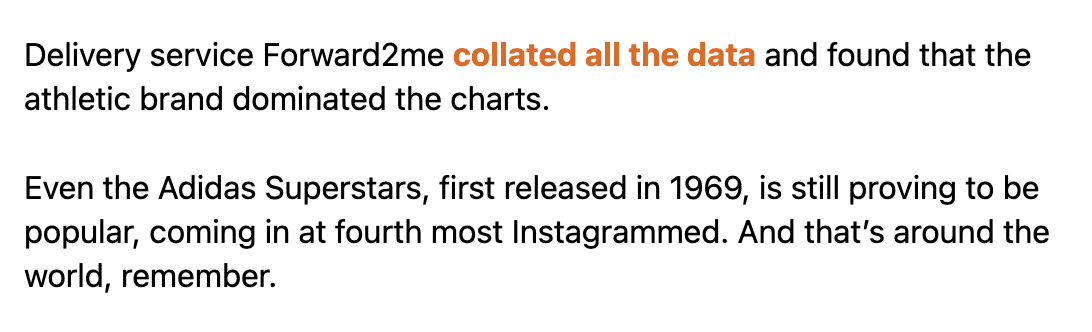
This link was earned through a PR link-building campaign for the company Forward2me. It was from one of the UK’s largest news publishers Metro—in this article.
How to find relevant journalists to reach out to
Fery and his team subscribe to media databases like Roxhill, Muckrack, and Cision to find relevant journalists. With those, you can ask queries like, “find me journalists who talked about X in the last month”.
But, there are other methods you can use if you don’t have the budget to invest in a media database.
For example, you can:
- Subscribe to HARO for free and browse what journalists are writing about at the moment.
- Look at the hashtags on Twitter: #journorequest and #journorequests and see if there are relevant topics you can provide insight on.
- Search on Google using site search, site:bbc.com “topic you want”
- Build your own database: use Google news/ scour leading news outlets to see who’s writing about your topic. Build a list and keep trying to get on their radar.
Types of content PR campaign journalists will link to
Journalists won’t just link to anything. You have to give them something thought-provoking, surprising, or relevant.
Here are the types of value you could propose to a journalist:
Research study PR pitch: Data-driven study that is interesting to journalists. Use one or more existing data sets from the internet to generate new insight the journalists can’t just make themselves in an hour.
Expert commentary PR pitch: Either reactive or seasonal commentary. Send an opinion from your CEO or other internal experts on something topical at the moment or even predict what will be interesting for readers.
Reactive PR pitch: Take a look at the key trends and events at the moment. Find unique insights that add to the story, perhaps from your own product or from datasets available on the internet. Package them up and send them to journalists—you’ll likely get the credit.
Three example campaigns 👇
Three PR Campaign Examples 👇
In the interview, Fery walked me through three campaigns he worked on. Let’s take a spin through them.
A reactive PR campaign that got 50 placements from sites like the Daily Mail and Independent
Client:
Workello - Commissioned to build links to their writer application assessment platform.
What Fery did:
Fery and his team noticed that in the UK there was a railway worker strike. Every journalist was talking about it.
Fery jumped on it. We took a look at what keywords were trending in Google search and discovered that the keywords “join union” had grown 200%, meaning that there was a large increase in interest for workers joining unions after seeing the benefits rail workers saw.
Fery put that insight in an email in 1 hour and sent it out to journalists.
Results:
Within one weekend, we got 50 placements in newspapers like the Daily Mail, Independent, and Daily Express.
Since Workello is about writers and applications, the topic of rail workers is relevant to what keywords they want to rank for.
The better the alignment between the story or research you present and your company, the better.
An expert commentary PR campaign that got 100s of backlinks from food-related websites
Client:
Food Fire Friends - A leading resource for BBQing
What Fery did:
Fery and his team saw a news story that there were international shortages of Sriracha sauce.
So, they created a DIY recipe for people to make their own sauce at home and sent that to 1,000 journalists.
As an expert in BBQing, journalists loved to publish their recipe and thanked Food Fire Friends for it.
Results:
The campaign saw 100s of backlinks. Check out this article as an example:

A data-driven PR campaign that got 50 backlinks from regional and national news outlets
Client:
An anonymous insurance company
What Fery did:
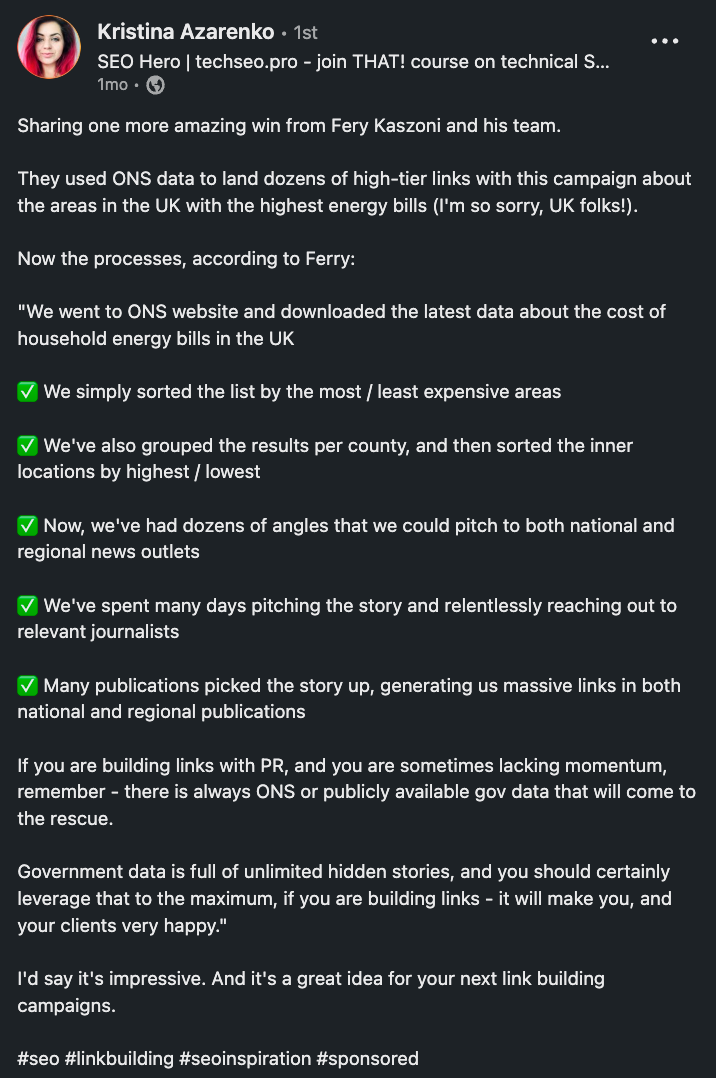
He went to the public government data site, ONS.
They found a dataset about the passing rate of driving tests around the UK and turned it into a story: Where is the easiest place to pass your driving test the first time in the UK?
They went one step further by generating the same statistics for individual areas—for example, what’s the easiest place in Oxfordshire to pass your driving test the first time?
They also created another story around the hardest areas to pass your driving test for the first time.
It was as simple as sorting the data set in order of pass rate, writing the key data point and then generating emails that are relevant to individual journalists.
Results:
The campaign received 50+ links from local and international news outlets.
Another example of a data-driven campaign:
The Forward2Me campaign is a classic example of this. They created a list of the “most Instagrammed sneakers” by analyzing hashtags across Instagram, and then made an infographic which they sent to 100+ journalists. The campaign earned them 108 backlinks.
A real email template
Here's an example of a real email template, kindly shared by Fery Kaszoni. This is an expert commentary paired with original data that hooks the journalist in.
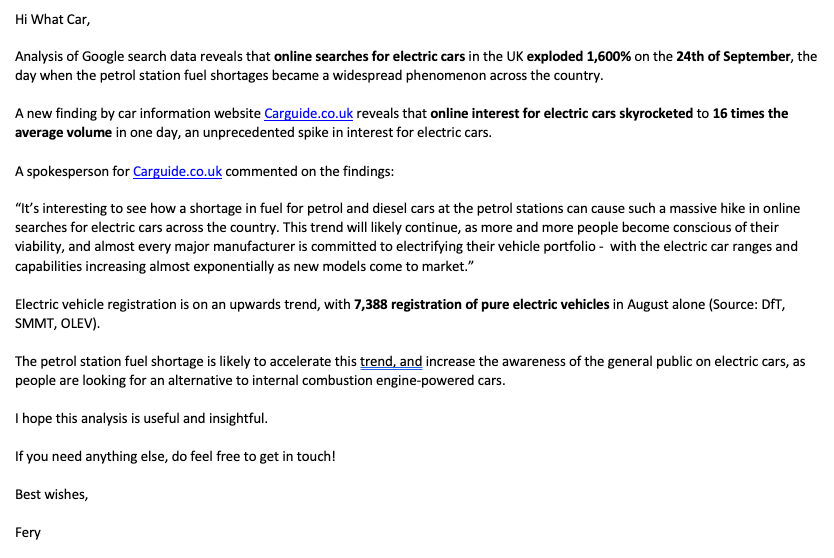
The goal here is to give the journalist an interesting story on a plate, building reciprocity, and offering to do their expert research for them in the hopes that they'll kindly link back to your website.
Note that nowhere did Fery ask for a link—that's the finesse of this technique.
And, here's one of the final links, earned in Bloomberg.

Final thoughts
This technique is a powerful way to accelerate your link-building efforts, while also increasing your brand presence.
Getting it right takes a lot of creativity. The art of the technique is in how unique, interesting and relevant the story you tell is.
Think deeply about what journalists are interested in right now—they have to answer to their boss about why they’re writing what they are at this moment in time.
If you can find something interesting even tangentially related to the keywords you want to rank for, that’s your sweet spot for a PR campaign.