

Ash Read initially launched Living Cozy as a directory for brands in the Home & furniture space.
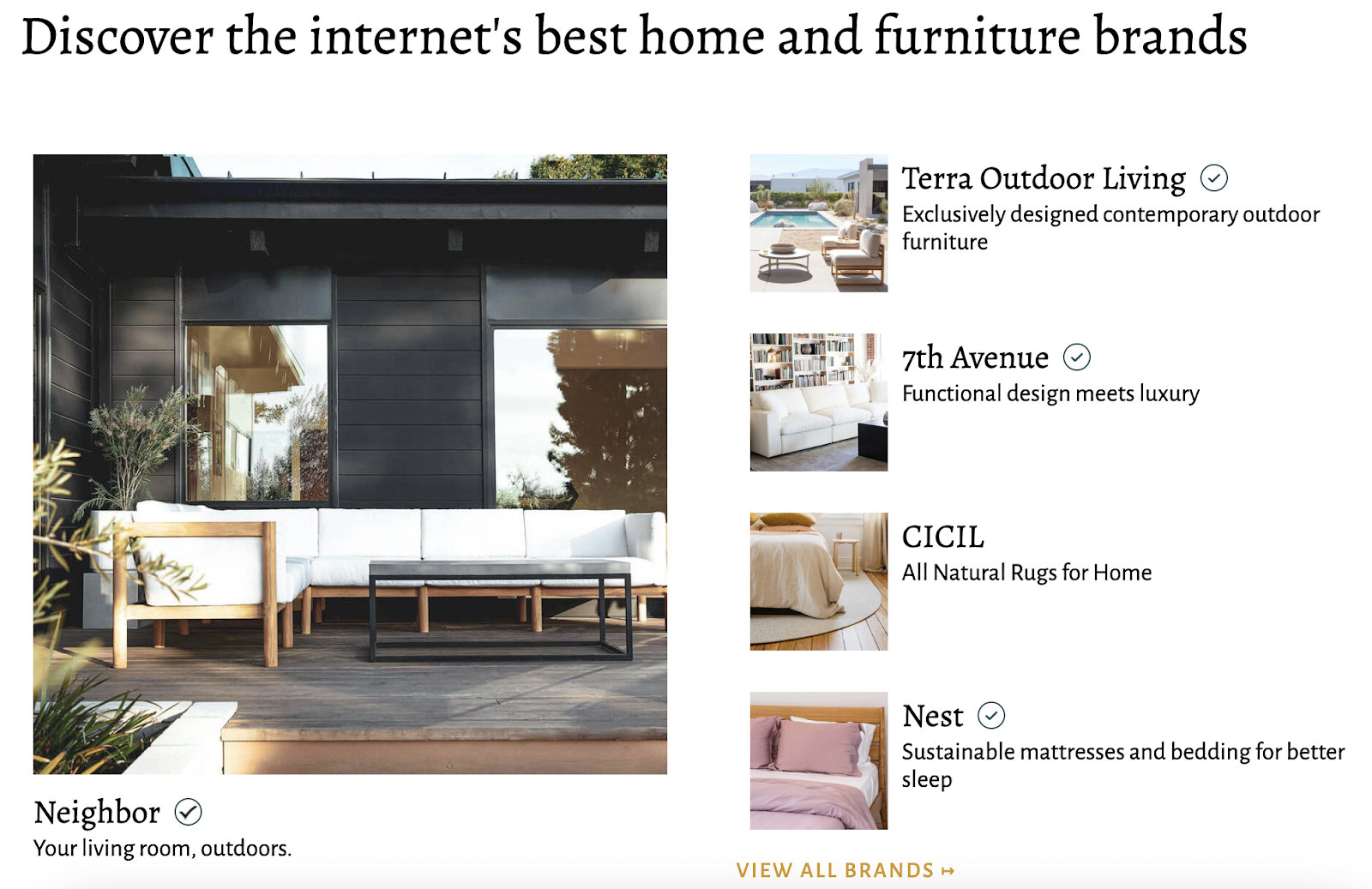
Initially, there was no 'grand plan' behind the site.
Ash struggled to find direct-to-consumer home and furniture brands when looking for himself and noticed that a lot of the brands were underinvesting in SEO.
So he created a directory, which started out with 50 home & furniture brands. After signs of initial success, he doubled down on his skills in content (Ash was the editorial director at Buffer for 6 years) to turn the directory into an expert review site using SEO to grow.
Ash started out writing about one article a week. He set himself a target of 50 articles, at which point he would better understand the opportunity in front of him.
“Whatever you're doing, like whether it's a website or starting an Instagram account, an email newsletter, I think just committing to a number gives you time for it to work. Because if you write one or two blog posts, you're not gonna see traffic and it's very easy to give up.”—Ash Read
It wasn’t until December 2020 (6 months later) that Living Cozy started generating meaningful traffic and he could tell it was going to become something profitable.
The publication now pulls in well north of £10,000 a month in revenue and 335,000 monthly page views.
In this case study:
- Living Cozy's initial content strategy and how it's evolved
- Three types of content and why they write them
- Why expertise is so important and how they get it for every article
- How Ash uses "layering" to ship more content quickly
- The ins and outs of Living Cozy's content operation
- Living Cozy's backlink strategy
Quick Stats
- Start date: 3 years old (April 2020)
- Organic traffic: 335,000 page views in January 2023
- Blog posts: ~300
- Monetization: Ash stopped talking publicly about revenue when it passed £10K a month. This split is 90% affiliate (SkimLinks and partnerships with 35 brands) and 10% - Display ads (MediaVine)
How Did Ash Decide What to Write About? A Clever Gap Targeting Strategy
Ash looked for “throwaway” content in the SERPs.
This is the type of content that ranks because the website is highly authoritative (e.g. written by a large brand with tons of backlinks), but the content itself is not up to scratch.
You can find it by Googling a keyword and assessing the top 10 with these questions:
- Is the content old?
- Is it low word count?
- Have they spoken to experts?
- Is it written by someone quickly?
When starting out, Ash looked for gaps he knew he could create something significantly better than was already out there.
Did Ash Build Content in Topical Clusters?
We all know topical authority is a hot topic in SEO nowadays. So, did Ash think about that?
Initially, he notes that it was fairly scattered. Ash targeted gaps and lower competition topics to rank on. The strategy then evolved to tackle topics as a whole.
Living Cozy began focusing on sofas and outdoor furniture and built authority in that niche area.
“One of my big learnings and tips would be to niche down even further. Obviously home is a ridiculously large niche. So really honing in on sofas meant that we were able to publish probably 50 to 75 guides about different types of sofas.”—Ash Read
An example cluster of content:

Living Cozy ranks for:
- 8,200 keywords containing the word “sofa”
- across 73 pages with 'sofa' in the URL
The site shows that competitive topic clusters are not 5-10 articles, they tackle EVERY keyword on that topic.
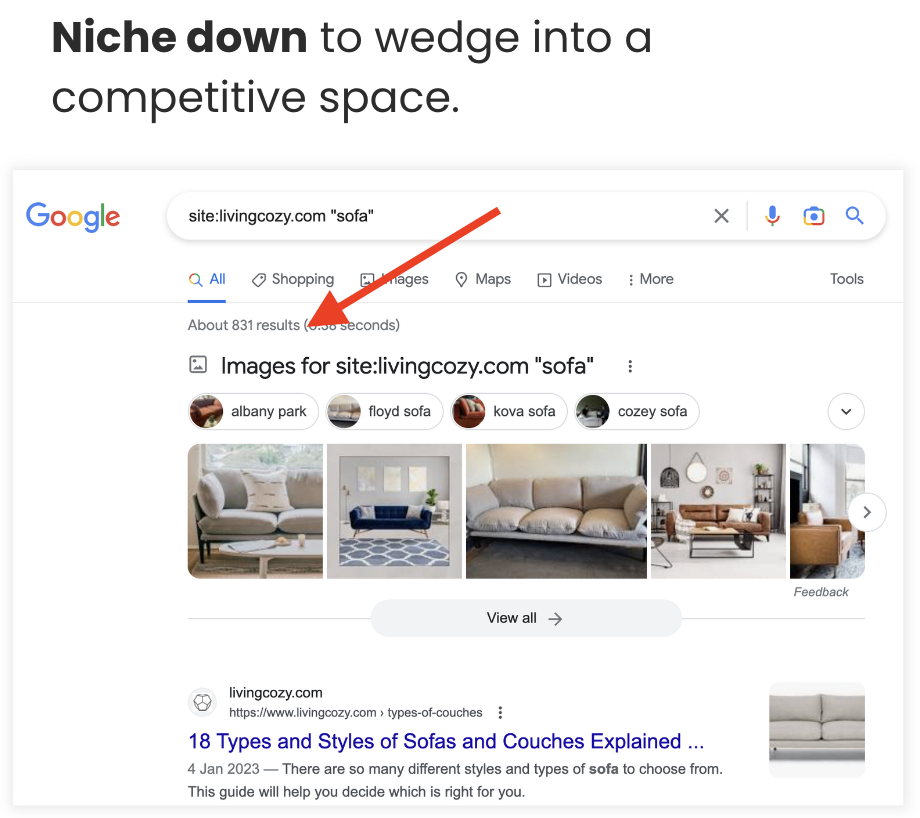
Ash noted that now when he plans out content he thinks about the topic as a holistic cluster.
3 Types of Content On The Site
The furniture and home niche is incredibly competitive. Not only are there lots of niche sites, but there are lots of large magazines and brands.
Ash’s focus was to focus on better, high-quality content.
“My focus was always on, just like, how can we produce something that's like slightly better than they've put out there because, you know, it's me running this business. I care a lot more about every single post than someone who is just working their way through a list of a thousand posts on behalf of a large conglomerate.”—Ash Read
Types of content include:
1/ Product roundups
Example:


These have high purchase intent and are prime for affiliate revenue.
Niching down into commercial keywords like product reviews and roundups allowed Ash to make money quickly and then invest in hiring writers and scaling this further.
2/ Informational articles

This is useful for ad revenue (traffic) and building topical authority on the sofa topic. Ultimately, these help Living Cozy win for the high-value “best X product” type articles.
3/ Interviews with founders
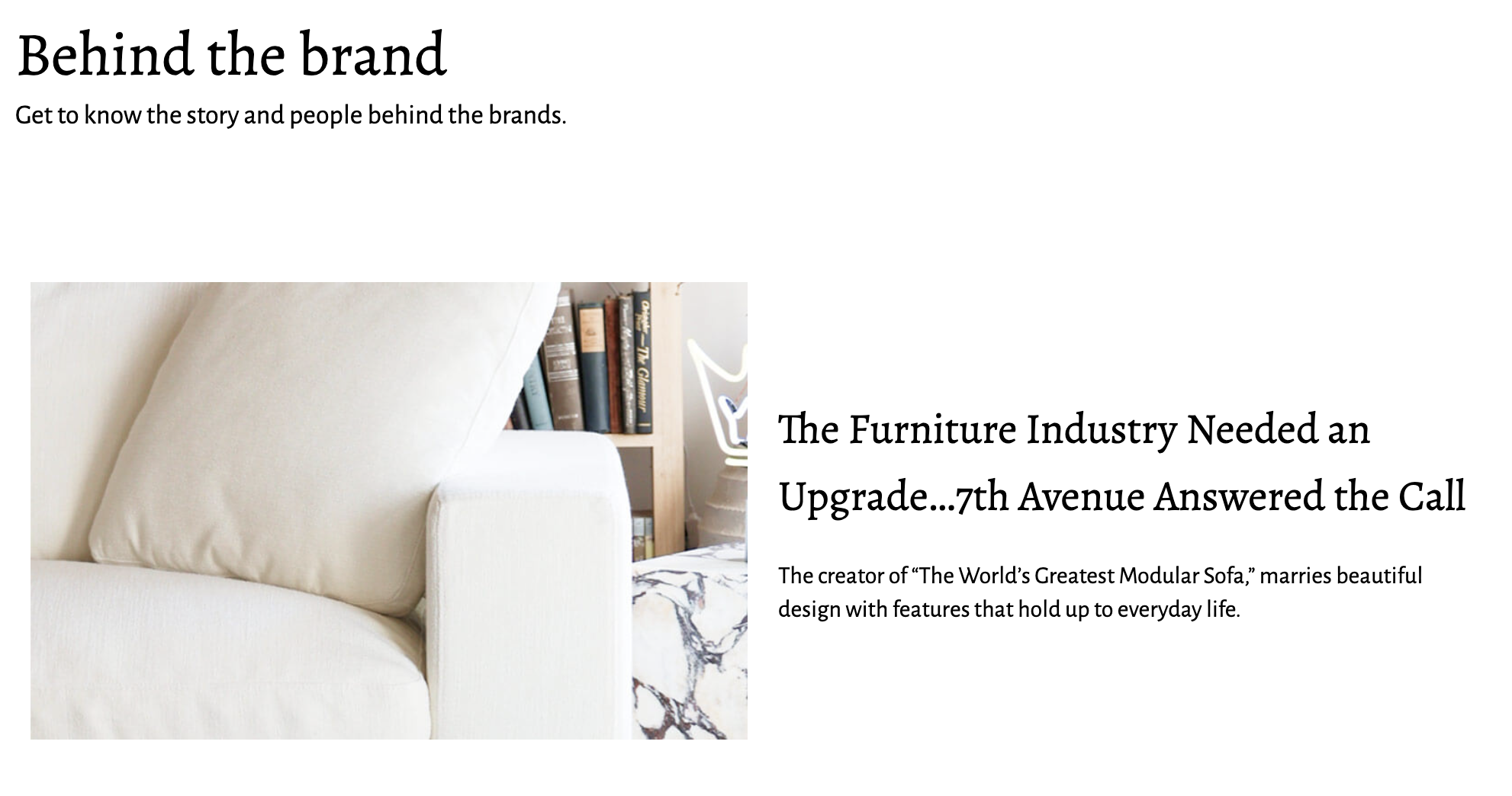
The Living Cozy team does interviews with the founders of brands they review. These interviews allow them to show of their unique expertise and win backlinks from the press page of brands in their industry.
Does this content get outdated quickly?
In short, yes.
Product lines end. Brands change the name of their product. New products come out all the time. Prices change.
“Every two or three months I go through the top articles on the site and just make sure that they are up to date. I see them as living pieces of content rather than something that you just like publish and leave forever.”
Product-focused content is profitable but it’s more costly to maintain. Freshness is key, especially when the year (e.g. 2023) is in the titles and core to relevancy with these keywords.
<INSERT VIDEO>
Expert-Driven Content - Does Every Article Use Expert Insight?
Ash knew from day one he wanted everything to contain expert insight from interior designers and consultants.
In the beginning, it was a slog. He didn’t know any experts and would reach out to them via directories to ask for input.
As the site grew in traffic, he was accepted into HARO (be in the top million of websites). HARO meant he could get insight at scale very quickly.
Ash then uses a technique called “layering” to move faster.
Content Ops Technique: Layering Expertise
Let’s look at an example: Top 10 Sofa in a Box Brands
Level one: Find the top brands, create a listicle, and link out to them.
Level two: Can I get expert quotes on what to look for in a sofa? What features and materials are best?
Level three: Can I speak to anyone at the brands themselves and get a quote from the founder on how they designed the sofa and why people should buy it?
Level four: Can I get a contributor to actually try and review the product? Can I get it shipped to their house so they can try it for real?
To be a trustworthy, authentic business, Ash wants to make sure every article has first-hand reviews within them.
Publishing Technique: Getting Expert Insight In All Your Content
Ash describes his process for publishing:
- Keyword research
- See what’s ranking
- List questions that need answering
- Sends to HARO
- Sends to his email list of 50 interior designer experts (get sent all the topics 1x per month)
- Those thoughts go into a brief
- That’s filtered into H2s and expert quotes are placed where they need to be
- A writer is sent the brief
He notes that this is taking a bit of time. But he’s working on an automation suite driven by Airtable which emails experts the questions automatically (we describe that in-depth later).
Where is Expert Input Required?
“I get expert input in most sections.”
He notes that he is not an interior designer and is not qualified to give advice on anything in this topic, let alone “where to place a sofa in your room?”
He offers an example:
“If we're talking about like sofa placement, there's probably like four or five standard placements that we could write a blog post about. But I like to then have each of those placements or points backed up by an expert that says: why you should or shouldn't use that placement; when it makes sense; when it doesn't. Because it gives some extra expertise and experience to that.”
As Ash notes, it’s important to be much better than your competitors on the SERPs. That’s the only way to win long-term in competitive spaces.
“I don't think there's any point like replicating what's already out there in the SERPs.Like you need to add something new or give people a reason to not just to like click on your links, but also give them a reason to stay, like once they've clicked on the link.”
How Does Ash Create a Writer Brief?
Ash describes his process for choosing section headings in the content produced.
Here are three questions to ask yourself:
- Look at the top 3-4 articles that rank
- What do they have in common?
- What does the #1 article the others don’t?
Build your H2s around what’s working in the SERP right now.
How to Improve Scalability in this High-Quality Production Process—The Automation System
As soon as the site started making money, Ash began working with freelance writers to increase content output.
“I would work with freelance writers to increase the content output because there's only so much that I can write every like week.”—Ash Read
He notes that he was able to get freelancers with bylines in top sites in the niche. That helps with Google’s E-E-AT.
It’s no secret we love a content operation in this community. Scaling production means outsourcing but also using efficient processes to streamline.
Ash noted that he wasted hours doing this process manually:
- Email an expert with topics
- Their response is emailed back
- He copies it into the brief
- He does that 10x per brief
- A brief then takes 2-3 hours total
- This process is done many times a week
This would be done with Google Sheets and Gmail by Ash manually.
As his operation improved and they worked on efficiencies, Ash’s team built out an automated process.
For example:
- Automated emails to experts
- Clear instruction on how to send responses
- Pulling responses into one place automatically

End-to-end, this looks like:
- He uses Airtable to house the questions.
- Zapier sends that to Webflow which creates a CMS item.
- One email sends out to the experts including links to all CMS items.
- Experts choose whichever links are relevant
- They fill out a form on Webflow
- The response gets sent back to Airtable via a Zap
Now, when Ash goes to create a brief, he can click on a blog post in Airtable and it is filled with expert quotes he can pull from.
Link Building—How Important Has it Been?
“I don't enjoy link building. I don't know if many people do, but I certainly don't."
When he had zero links or authority, and zero budget to invest in backlinks, he decided to create content that would draw in backlinks.
That content was interviews with the founders of the brands he was reviewing.
“This was a key part of the content strategy anyway, just to interview the founders and people that work at the brands that we talk about because it gives us extra information and also like exclusive stuff that you don't get on other sites.”
Within all of their content, they could reference the interviews to improve the quality of the content created.
But to build links, Ash prioritized brands with press pages on their site. Once the interview was produced he would reach back out to their PR team and ask for a link to the article.
“I could then go back and say, does this fit with your press page? Can we have a link? And then we'd get like very relevant links from brands in our space.”
This was a smart initial approach because all the links were from sites with:
- High authority
- High topical relevancy
Which makes those backlinks extra valuable.
How has your backlink-building strategy changed?
After this initial approach, the Living Cozy team started investing in PR backlink building.
“Once there was budget to do it, I started investing in digital pr and so we work with a PR agency called Digital Loft.”
They’ve been working together for over a year. That team creates reports and campaigns together that are link-worthy:
Example: Interior design trends. What design styles are people searching for more this year?
This strategy means they’ve got links from every big publisher in the space.
“We've been linked to by pretty much every other big publisher in the home space, like Apartment Therapy, Domino, Bed Homes and Gardens, Architectural Digest. We've had backlinks from all of them. I think that's played a really key part in our growth.”
Your Monetization Strategy - How Will it Change?
The site mostly earns money by driving traffic to other brand websites, but Ash wants to make it 50/50 with advertising to tap into lower volatility search terms (What is “X”? rather than “Y brand review”).
He notes in the interview that he also plans to diversify away from SEO, to monetize the newsletter list with sponsorships or possibly memberships.
<INSERT VIDEO - Diversify revenue stream>
What’s Your Secret Sauce?
“Working with true experts across every piece of content and getting firsthand reviews of products. That's kind of where a lot of our growth I think has come from.”