
This week's SEO case study is with the world-class SEO & content strategist, Jakub Rudnik.
Safe to say he's been around the block. He was at G2 during the hyper-growth years, on which he notes:
"At G2, the big thing was our big goal of total articles written not the end result. It was the biggest mistake we've made in our career, writing 500 articles that never generated traffic or revenue or anything.”
He's also an ex-writer for the Chicago Tribune and a journalism professor, giving him an eye for what grabs the reader's attention—more on that later.
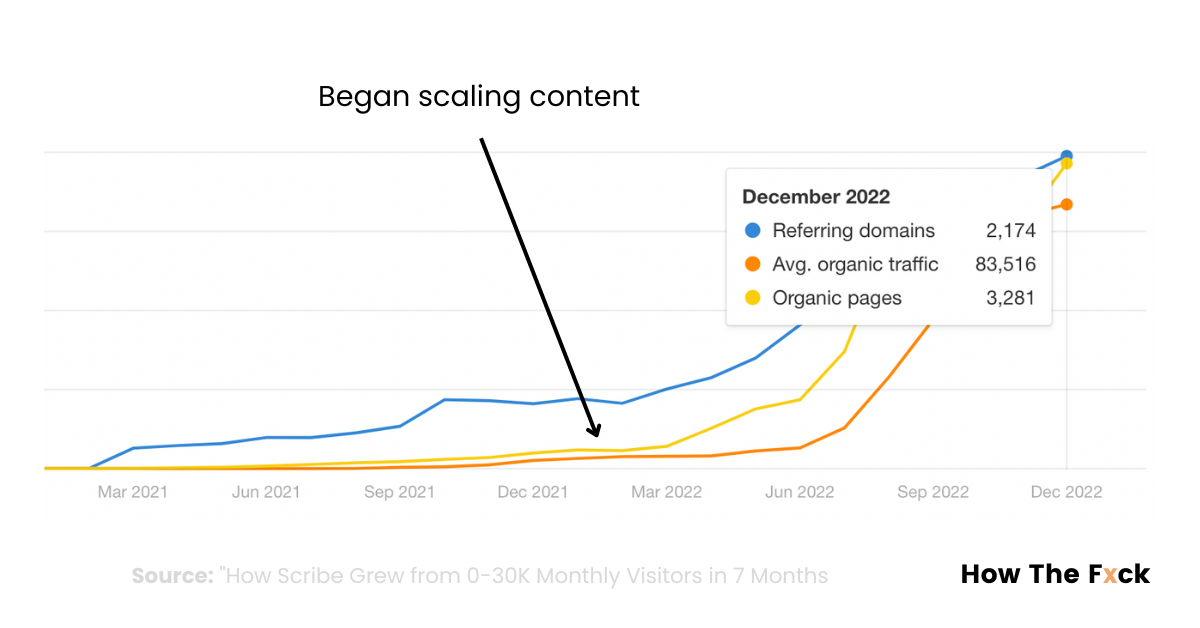
Now leading content at Scribe, I catch up with Jakub to hear how his team grew monthly traffic from 0 to 30,000 in 7 months.
In his time at Scribe, they've grown 40x from 5,000 product installs to 200,000. Blog user signups grew from 0 to 1,900/month.
But, figuring out what content drives signups has been an iterative process.
Whether it's topic types, use cases vs personas keywords, or on-page optimizations, overtime experimentation has allowed them to hone in on revenue-driving content.
Jakub notes that the power of publishing 50-100 articles monthly, is that you have up to 100 new data points to learn from and help reallocate resources every single month.
Expect to learn:
⚡ How to build a world-class content strategy that actually drives revenue.
⚡ How journalism and content marketing overlap (and where they don't).
⚡ How Scribe iterated its content strategy around revenue signals.
⚡ Whether SEO is right for your company, and how to leverage your product in your strategy.
Listen to the episode here.
How Scribe Grew from 0-30K Monthly Visitors in 7 Months
In this case study, Jakub Rudnik walks us through the first seven months of his role as Head of Content at Scribe.
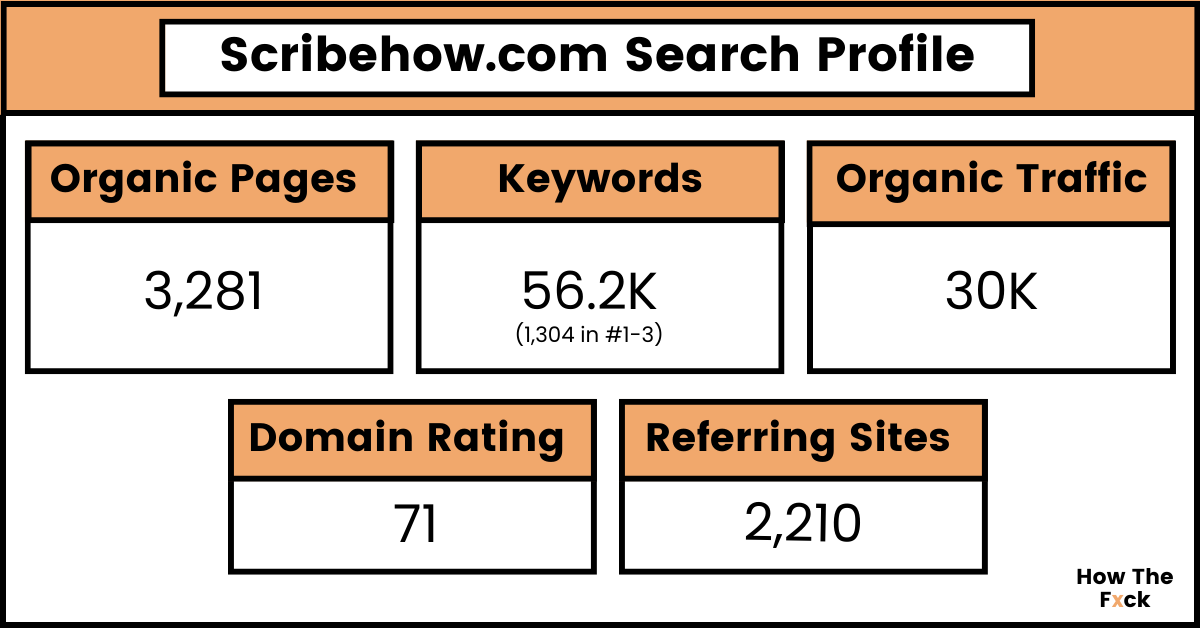
In three short months, Jakub grew Scribe’s organic traffic from 0 to 15,000 monthly visitors. By month 7 they’d hit 30,000.
The project drove so much immediate ROI that he unlocked 4x the budget, increasing publishing from 25 to 100 blog posts per month.
Jakub’s background in journalism helped Scribe breathe quality into its content. Whereas his experiences with G2 helped him avoid content creation pitfalls and *actually* drive content-led revenue growth.
Before the start of the project
- 0 organic visitors
- 500 referring domains
- 5k product installations
Project inputs
- 350 blog posts in total over the course of 7 months (20-30 monthly for 3 months, then ramping up to 100 per month)
- 7 months of publishing
- 2 in-house marketers + a range of freelance writers
- $10k a month new content budget, increased 4x as the strategy started showing results
- Average of $400 per article (more if for longer or more impactful articles, less if it’s an experimental subject)
Results in December 2022
- 30k organic blog visitors a month
- 1800 referring domains
- 200k Chrome store installations
Let’s deep dive into the techniques and frameworks Jakub and his team applied to help Scribe rise to the top of the search results.
Why Scribe Chose SEO as a Growth Channel
SEO is not for everyone.
Every website should have strong SEO foundations: fast, optimized, architecturally sound, and should aim to keyword optimize where possible.
But, the kind of fast-growth style SEO we often hear in these stories is resource-intensive. It's not just $10,000 a month. It's the setup, the templates, the editing, and the testing. It takes a small army to get right.
And, for some innovative use cases, finding the sparse keyword opportunities will mean stepping away from the problem your product actually solves.
When this is you, SEO is not always the best way to grow and that budget might be spent better elsewhere.
For Scribe, SEO was easily the right choice for a few reasons:
- The product has lots of use cases. As a tool that helps anybody build “how-to” guides the use cases are vast and cross teams, companies, company sizes, and the like. That means the opportunity to target searchers on Google is vast.
- It’s a product-led growth tool with a very simple, free, instant sign-up process. That makes it easy to include in a list and easy to embed into a how-to guide.
Scribe as a product also lends itself naturally to SEO.
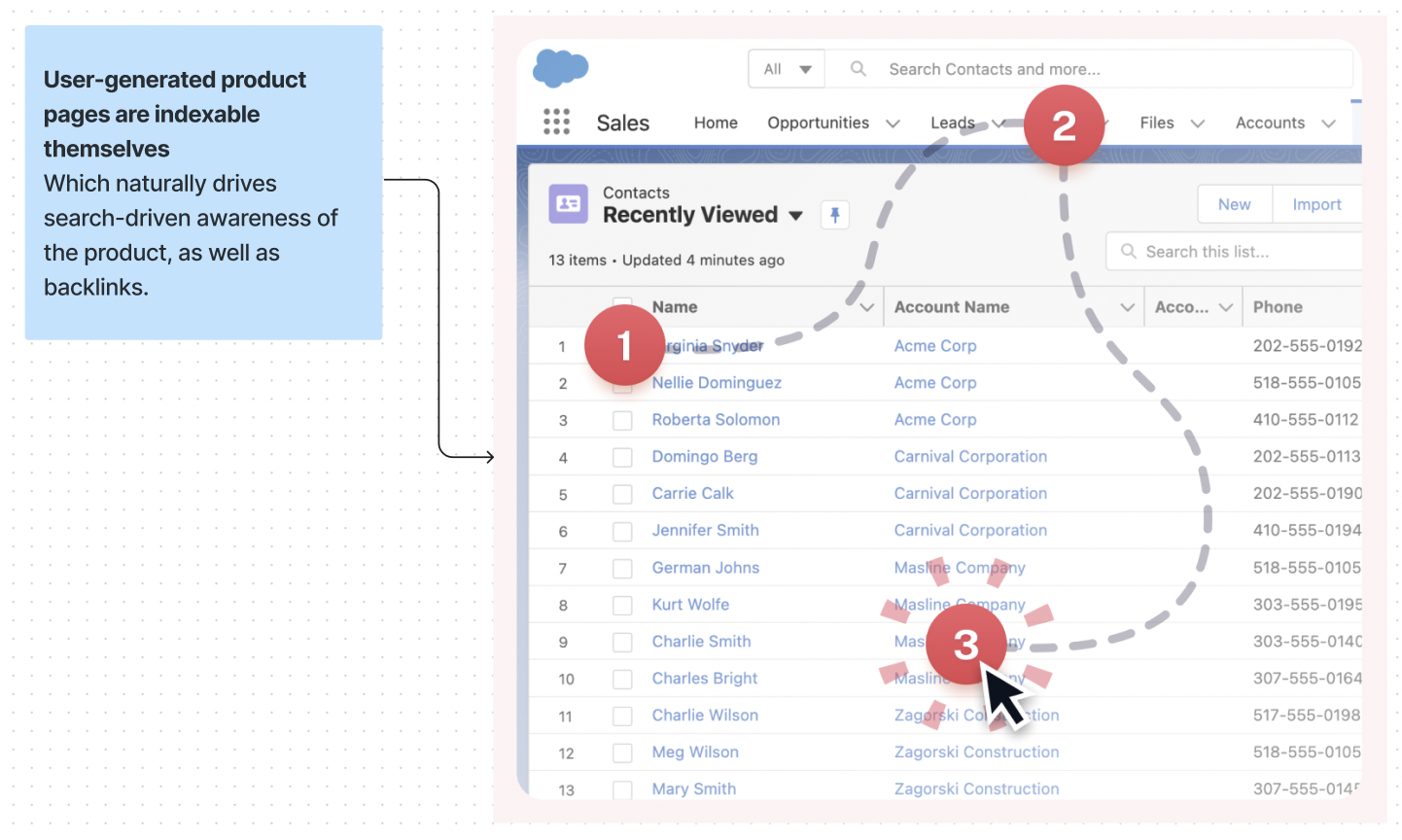
When Scribe customers use the tool, it generates an indexable webpage that looks like a "how-to" guide. Those often hit the first page of Google by themselves.
For example, a Scribe ranks #3 for the keyword "OnlyFans login" driving an estimated 8000 monthly visitors. (Note: Ahrefs estimations are often inaccurate for brand key terms like this)

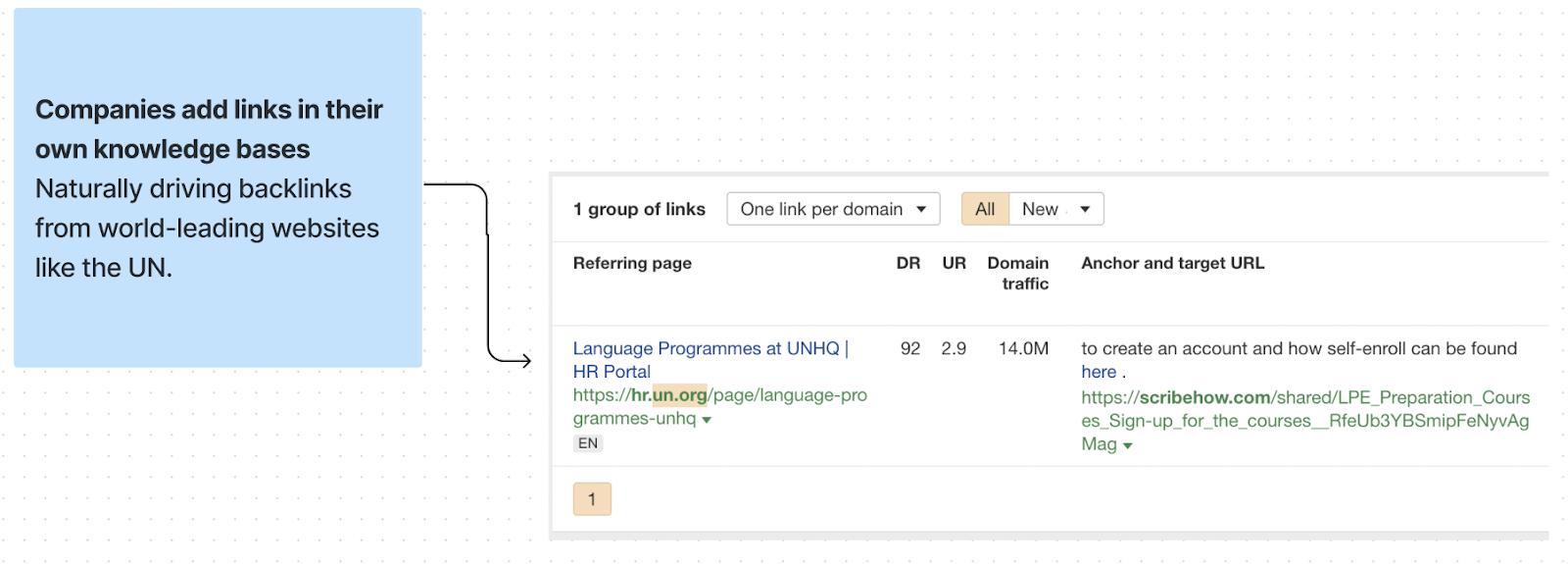
The freemium product is hosted on the site's domain, too, which helps them naturally build backlinks. For example, the UN's HR department has used Scribe and linked to it as an internal resource, giving Scribe a backlink:
These factors, along with early signals that confirmed these assumptions, meant investing in SEO made sense for Scribe.
Content Strategy: How Scribe Chose Which Topics to Write About
Jakub was not always into the SEO game. He’s an ex-Chicago Tribune writer, journalism professor, and content manager by profession.
For that reason, I was particularly keen to get his advice on content strategy.
Jakub’s team went through a bit of trial and error before they found a successful method for choosing topics that converted readers to customers.
Here was their process for choosing what to write about:
1/ They tested persona-based content
At first, Jakub and his team took existing personas built by the marketing team and tried to back those into keywords.
For example, they knew Scribe is used during the employee onboarding process so they decided to write content targeting “employee onboarding” cluster keywords.
This proved to be less effective for driving signups.
“The [marketing persona] driven content has just been a little less effective because you’re typically like, one step removed from the core of your tool.” - Jakub Rudnik
Why? Because Scribe was only helpful for 5% of the employee onboarding process—it’s much more than a few how-to guides. While Scribe could be helpful, it wasn't solving a mission-critical problem.
“Documentation is [just] one of 20 things of someone creating an employee onboarding process, we are only 5% of their overall aims.”
2/ Then, focused on content that’s persona-agnostic yet use-case-specific.
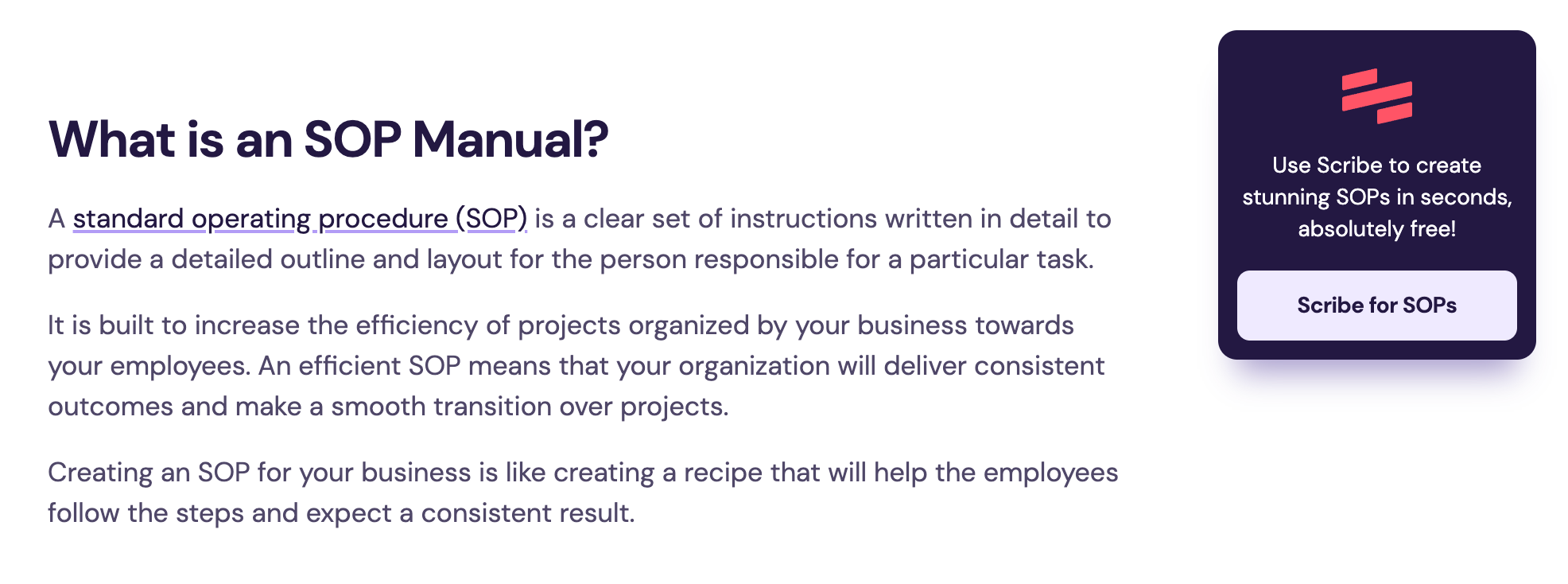
Instead of “employee onboarding” they targeted someone searching around standard operating procedures (SOPs). That's where Scribe becomes mission-critical.
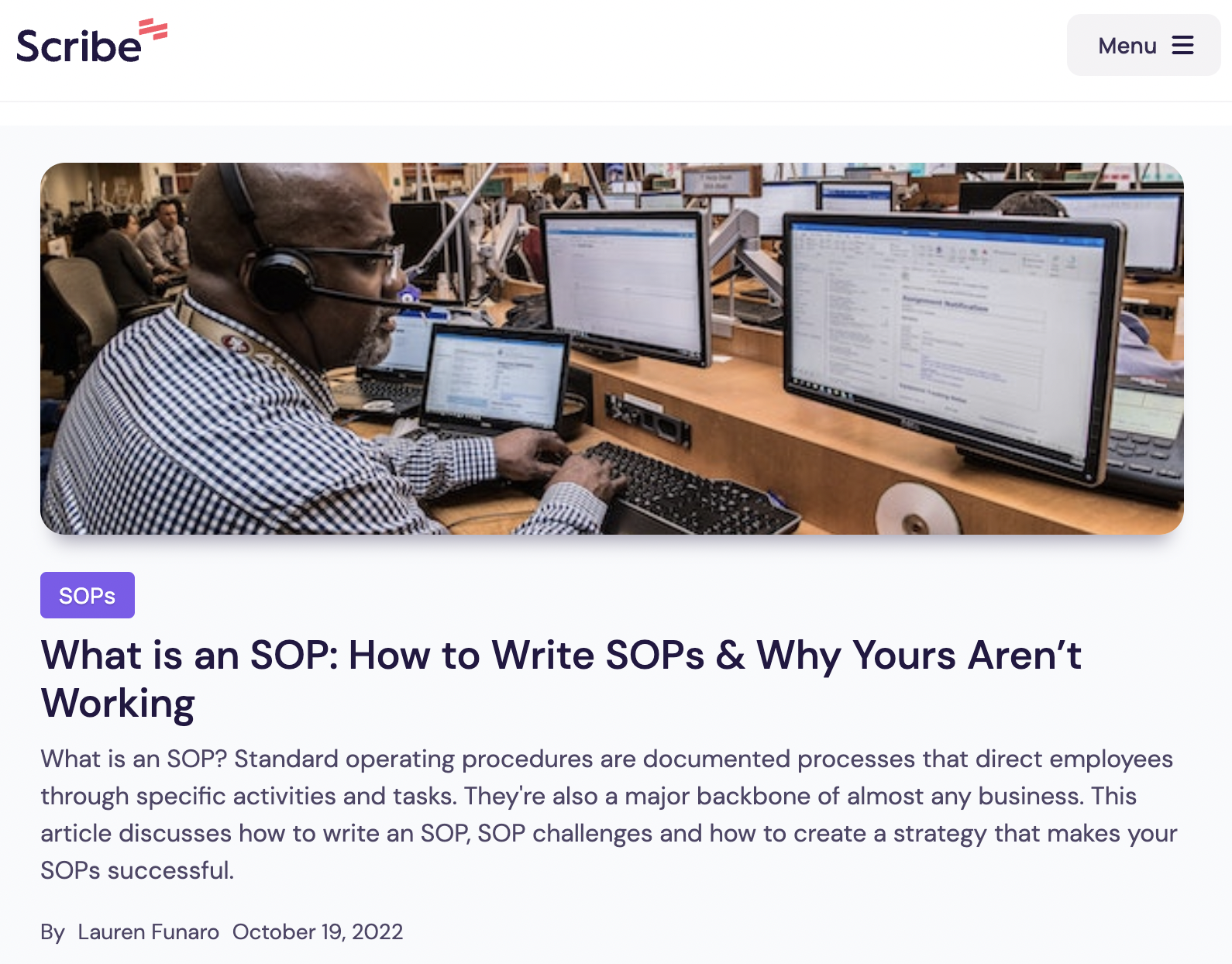
SOPs can almost ALL be created using Scribe.
Jakub recommends that you ask this question to determine which topics to prioritize: “How much of this problem does our tool actually solve?”
The higher the percentage, the more likely this piece of content will convert the reader into a user.
With this in mind:
- Write about the specific problems that your product features solve (and how they solve them).
- Use the language of your users to find new topics and keywords. Use social media and connect with your users through surveys, emails, and user interviews. These will become indispensable sources of new topics for your content strategy.
“I get these founders that DM me like, What is it? What is it that you’re like, doing differently? It’s like, we’re not doing that much differently, we’re just literally listening to people and then showing them how our product solves what they need help with.” - Jakub Rudnik, How the F*ck SEO Podcasts
Supermetrics and UserPilot follow a similar content strategy to this. The teams from Scribe, Supermetrics, and UserPilot made the same point: the more use cases your product has, the more it lends itself to high-conversion SEO.
We can see from Scribe's "top pages" report on Ahrefs that their use case content contains topics like:
- Screenshare tools
- Knowledge management system examples
- Work instruction examples
- Technical documentation examples
- SOPs for training
Among many others.
3/ Iterate topic choice based on revenue metrics
A critical point in Scribe’s journey was iterating what content they worked on. Jakub describes their process as:
- Guess the content you expect to work
- See what really works
- Integrate more user/reader feedback
- Write more content around these areas
- Use language/key questions users have
Scribe launched 100 articles in a relatively short amount of time. That gave them 100 data points immediately for what topics and content types were driving sign-ups.
They doubled down quickly on content driving the most signups and revenue.
“We have 100 data points right away that tell us like, this type of keyword format and this persona or whatever it is - this is generating no signups. And this is generating a ton of signups.” - Jakub Rudnik
Jakub notes that with their publishing velocity, you can produce 50 new articles similar to the ones that are working very quickly.
Velocity: Should You Publish 70 Blog Posts in One Week?
Jakub and his team created content before the CMS was ready to launch. By the time they were ready, the team had already pre-written around 70 evergreen topic blog posts.
They published them all at once, as soon as they could.
“Google and your readers don’t care when you publish. [...] The faster you can get something up and indexed and ranking, the better. So don’t wait on a content calendar, just do it.” - Jakub Rudnik
Jakub makes the important point that with evergreen content topics, neither Google nor the reader cares when it was published. There’s no issue with pressing publish on everything at once, in fact, he thinks Google took note of the high volume and indexed it quicker.
How Long Before Scribe Started Seeing Results?
With 70 blog posts already on the website, the first visitors started trickling in within the first two weeks.
At the end of the first month, there were just under 1k visitors for those 70 published articles.
But Jakub highlights month three as the moment when things started really picking up. That’s also when signups and revenue began flowing in.
Their organic traffic shot up from 3-4k to 10-15k visitors and the first signups and revenue came along with that.

With how quickly meaningful results started coming in, it wasn’t difficult to get buy-in from the Head of Marketing and Scribe’s co-founders to scale up content creation to up to 100 articles per month.
How to Track the ROI of SEO
In the case of Scribe, an uptick in traffic resulted in an uptick in signups, which brought in more revenue.
This is characteristic of startups with short sales cycles, where it’s relatively easy to connect a piece of content to revenue.
But it’s not always so straightforward.
For startups with long sales cycles (+6 months), it would take a long time to learn which content was working if looking only at closed deals.
A better way to track SEO ROI would be to measure the number of leads generated from SEO content.
The higher the intent of lead the better. Use Hubspot to track which content is driving demo requests, and optimize for that type of content. As your plan progresses, assess the impact of different topics and content types on pipeline and, eventually, revenue.
Scribe’s Link-Building Strategy
“Links work. People think that they don't but I can point to dozens of my articles where things had stagnated, we built a link, and overnight things jump, like, links definitely work.”
As noted before, Scribe naturally earns a significant amount of links through their product. But, that doesn’t mean they don’t build targeted links as well.
Jakub’s team leverages relationship-based link-building.
In short, they build intentional backlinks from warm leads, anyone they knew who had an authoritative website with articles that mention keywords like documentation and processes. (Since anyone creating documentation at work could use Scribe.)
“So instead of sending 1000 emails to get 20 responses to get 3 links, we’re just sending emails and Slack messages to people that I know are link building already, people I know that understand the benefit of link building and have a reason to work with me.” - Jakub Rudnik

Scribe’s integrated backlink generating element, their website quickly got up to a domain rating of 37.
From there, their relationship-based link-building technique was enough to get them to a domain authority of 70.

But, Where Should You Start if You Have a Domain Authority Close to Zero?
Many SEOs and founders are creating content on a website with zero authority. This is a mistake.
While you should start publishing immediately, you should also build strong foundations for your website. Low-authority websites will simply take longer to rank and see results.
Jakub offers some tips for where to build early backlinks:
- Get your website up on every review website you can think of, such as G2
- Get your website on lists specifically created to increase domain authority
- PR link building through product launch announcements, Series A announcements, and similar
Once your DA gets up to around 40, link-building through guest posts and relationships becomes a lot easier.
Here are some more backlink-building tips that I use for my websites:
Content Quality: The Journalist’s Approach
As a journalist by trade, Jakub was keen to make sure the content Scribe created was high quality and reader-friendly.
He gave me his top tips for doing that:
“As a journalist, I’d never turn in a story without three sources, so how do I get three productivity experts to go talk about productivity for Scribe?”
- Be data-driven. Find original sources and leverage experts to build trust, credibility, and quality in your content.
- Tell stories. People find stories engaging, and why shouldn’t that be true in B2B content, too?
- Make things easy to read. Newspapers aim for 6-8th grade reading levels to make sure their content is widely accessible.
Here’s what Jakub tells his journalism students:
“Shorter sentences offer better retention” and “shorter paragraphs offer more skimmability, as do bullet points”.
“Google wants you to get people down the page. They want people to get the answer and get out. The more you can do to make your content more accessible, the better it will be for your users, the better in Google’s eyes.”
I couldn’t agree more 👏 In my case study on Investopedia’s SEO strategy, I point out how their UX makes their content highly accessible to the reader.
Final advice: Top 3 mistakes to avoid
I asked Jakub to share three mistakes he would make sure to avoid if he were to have a do-over.
Here they are, in no particular order:
Mistake 1/ Writing for quantity instead of the end result. Your 100 blog posts don’t mean much if they don't bring in leads, signups, or revenue.
“At G2, the big thing was our big goal of total articles written not the end result. It was the biggest mistake we've made in our career, writing 500 articles that never generated traffic or revenue or anything.”
Make sure every article has a purpose.
Mistake 2/ Writing away from the product. Write your content with your product in mind. Ensure every article has monetization logic built into it—the more closely it aligns with your product value, the better.
Mistake 3/ Set up the order of operations from the get-go. In Jakub’s opinion, struggling with operations in the beginning (such as setting up a CMS) cost them about two months of growth. Make sure your CMS and uploading processes are seamless, ASAP.
Avoid these three mistakes to accelerate your success.